How to Decorate a Small Living Room for Kids Easily
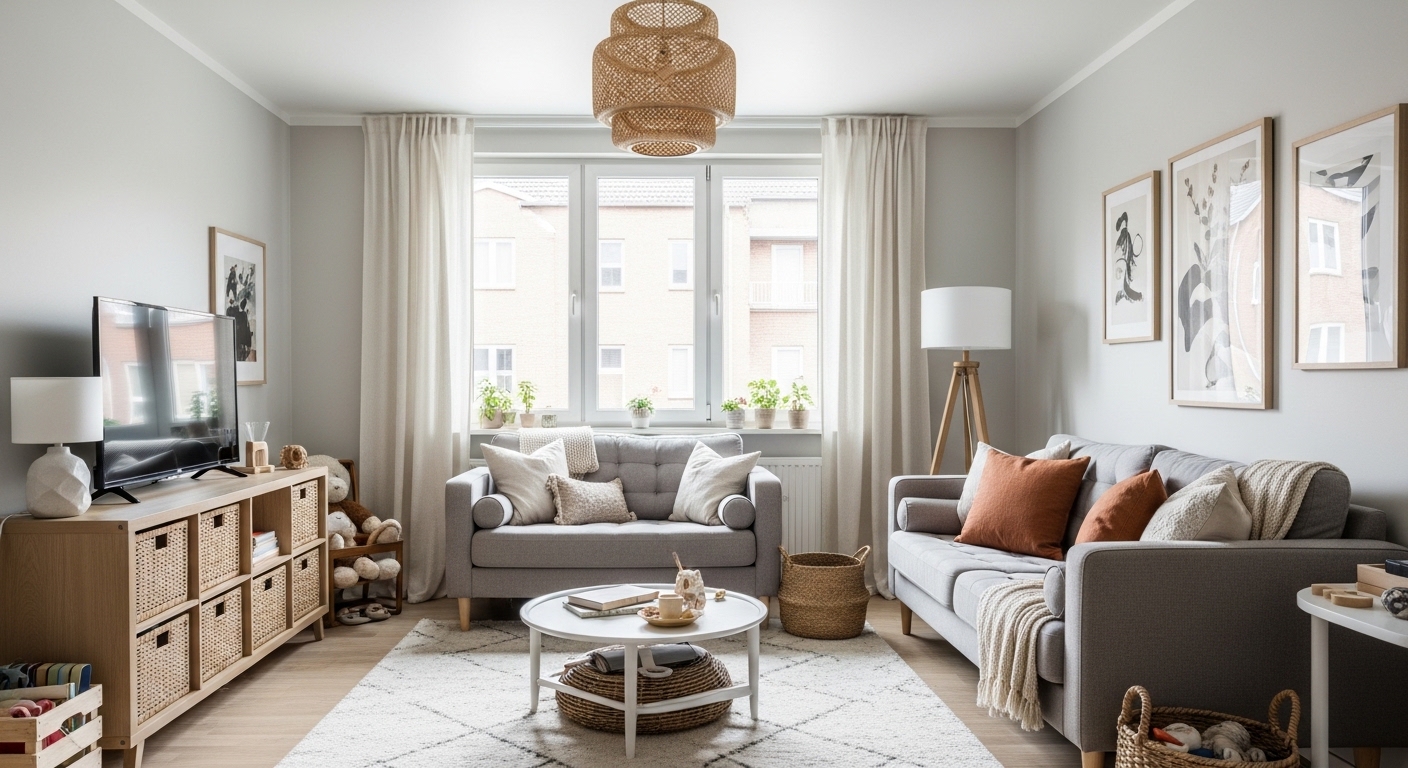
I stared at our tiny living room. Toys everywhere. The couch took up half the space. Kids ran through, and it felt chaotic. No room to breathe.
I wanted a spot where they could play but it still felt like home. Not a playroom explosion.
One change at a time fixed it. Now it works for us.
How to Decorate a Small Living Room for Kids Easily
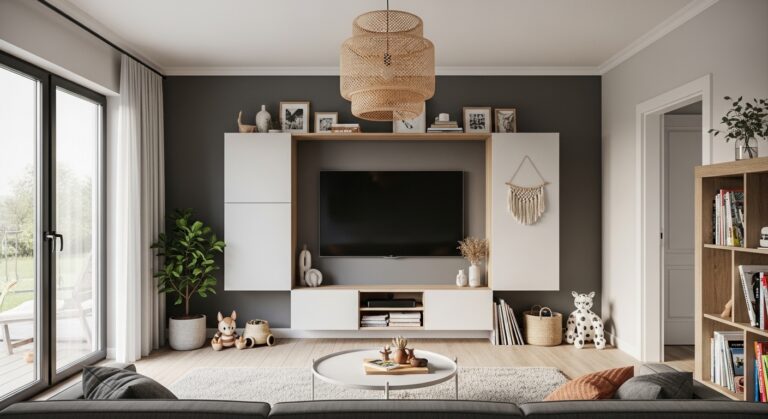
This shows you how I make a cramped living room feel open and kid-ready. You end up with space that invites play without clutter. It fits real life.
What You’ll Need
- 5×7 foot low-pile area rug in soft blue
- Two 18-inch round poufs in gray canvas
- Narrow white bookshelf, 24 inches wide
- Woven storage baskets, medium size
- Framed animal prints, 8×10 inches
- Floor lamp with fabric shade
- Colorful throw pillows, 12-inch squares
- Wall hooks in matte black
Step 1: Clear the Floor for Open Play Space
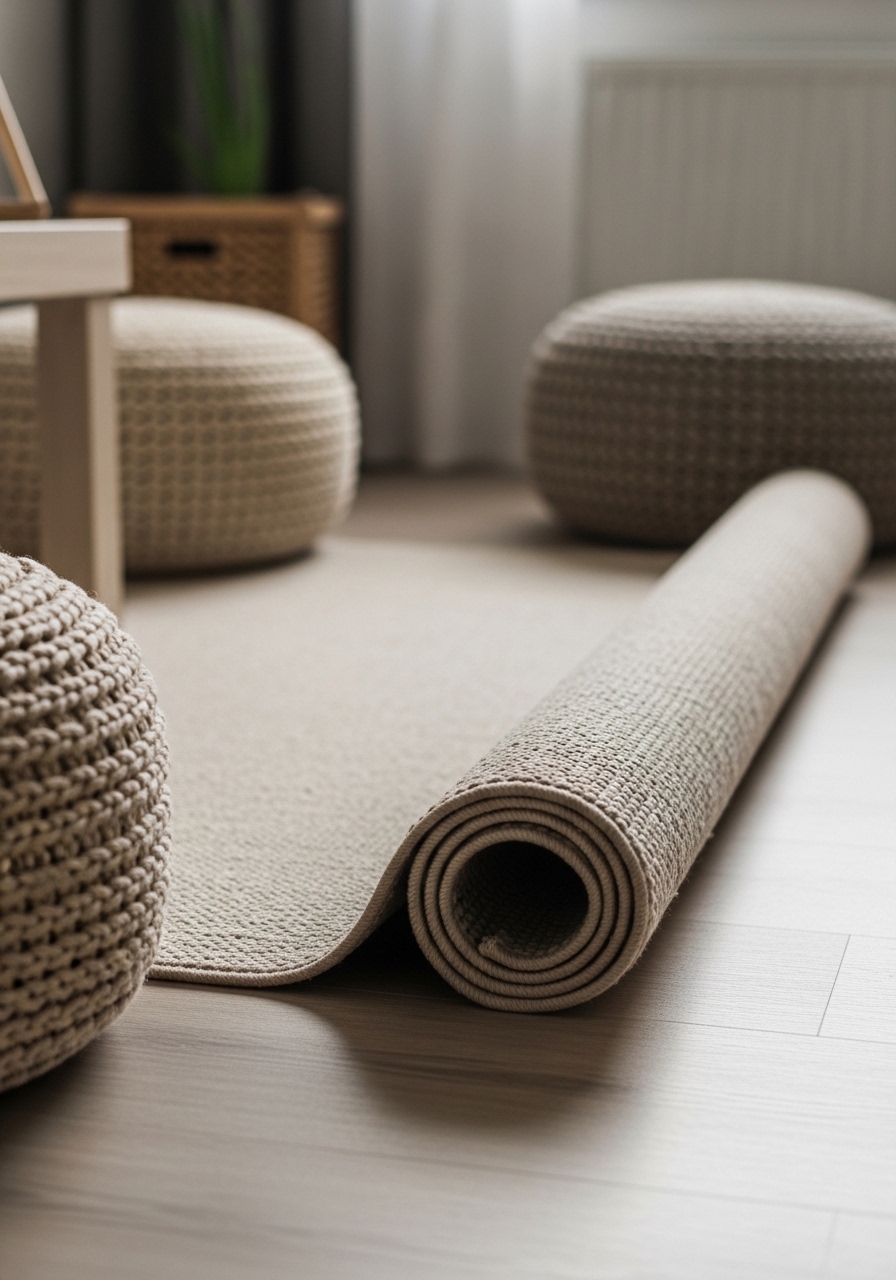
I start by moving everything off the floor. Toys into baskets. Extra furniture out. This opens the center.
Visually, the room breathes. Light hits the floor. Kids see paths to run.
People miss how floor space sets the calm mood. Without it, everything feels jammed.
Skip piling stuff against walls early. It blocks flow.
I roll out the low-pile rug next. It grounds the area. Kids sit comfortably. The blue softens the edges.
Now play feels invited, not squeezed.
Step 2: Anchor with Low Seating

I add poufs first. Low and round. They tuck under the bookshelf when not used.
The room gains spots to perch without crowding. Height stays even.
Most overlook low pieces. Tall chairs shrink the space more.
Don't center them. Push to edges for walkways.
Pillows lean against the wall. They add color pops. Kids grab them easy.
Balance returns. Play stays contained.
Step 3: Build Vertical Storage
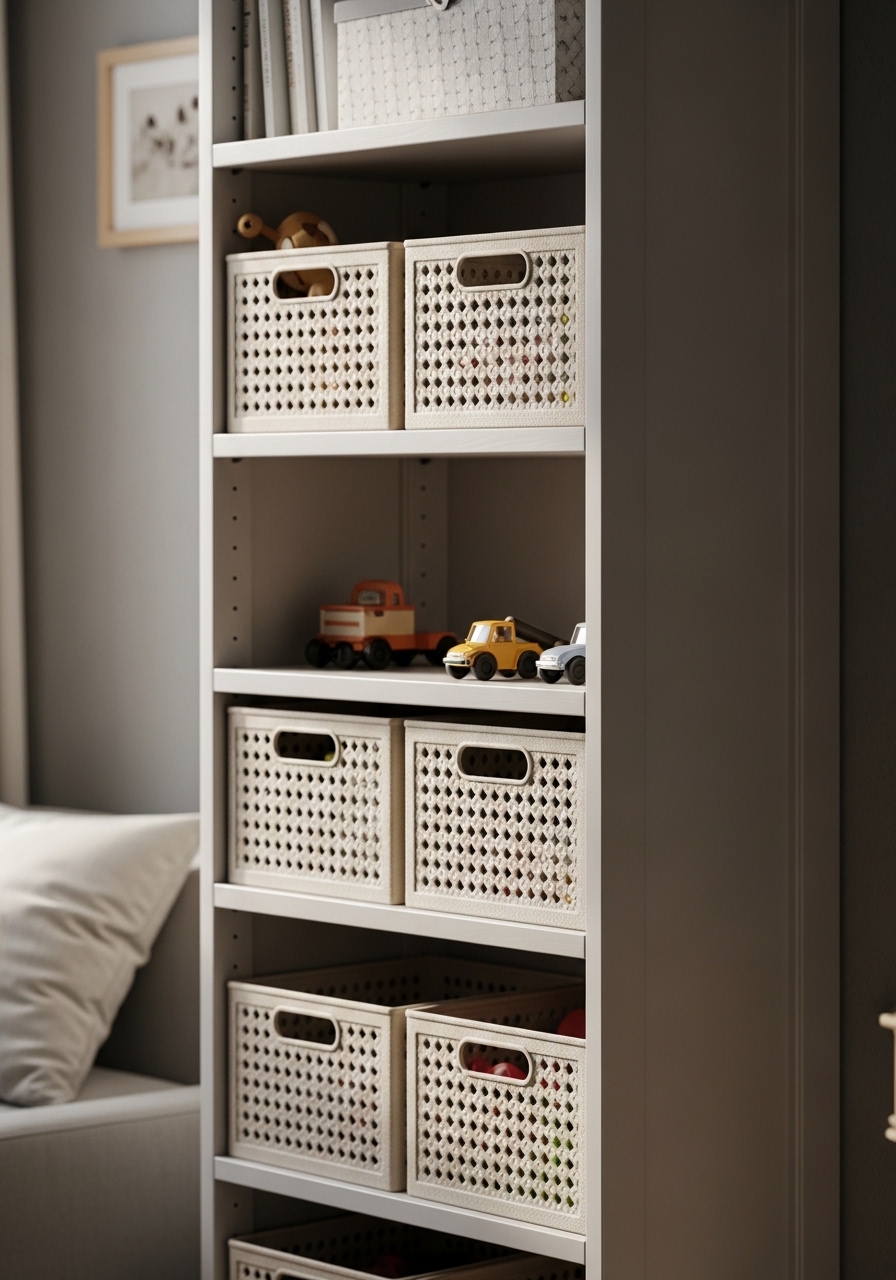
I mount the narrow bookshelf high. Baskets hold toys below.
Walls take the load. Floor stays free. Depth looks bigger.
Folks forget to group by use. Books up, toys down.
Avoid overfilling shelves. Half-empty looks airy.
Hooks go nearby for bags. Kids reach them.
Space feels organized. Chaos hides.
Step 4: Layer Playful Details

I hang prints at kid height. One per wall.
Colors warm without overwhelming. Eyes rest.
People cram too many. One focal point per side works.
Don't match everything. Mix patterns lightly.
Floor lamp in corner. Soft glow at night.
Room feels lived-in. Balanced for daily use.
Step 5: Check Balance and Adjust
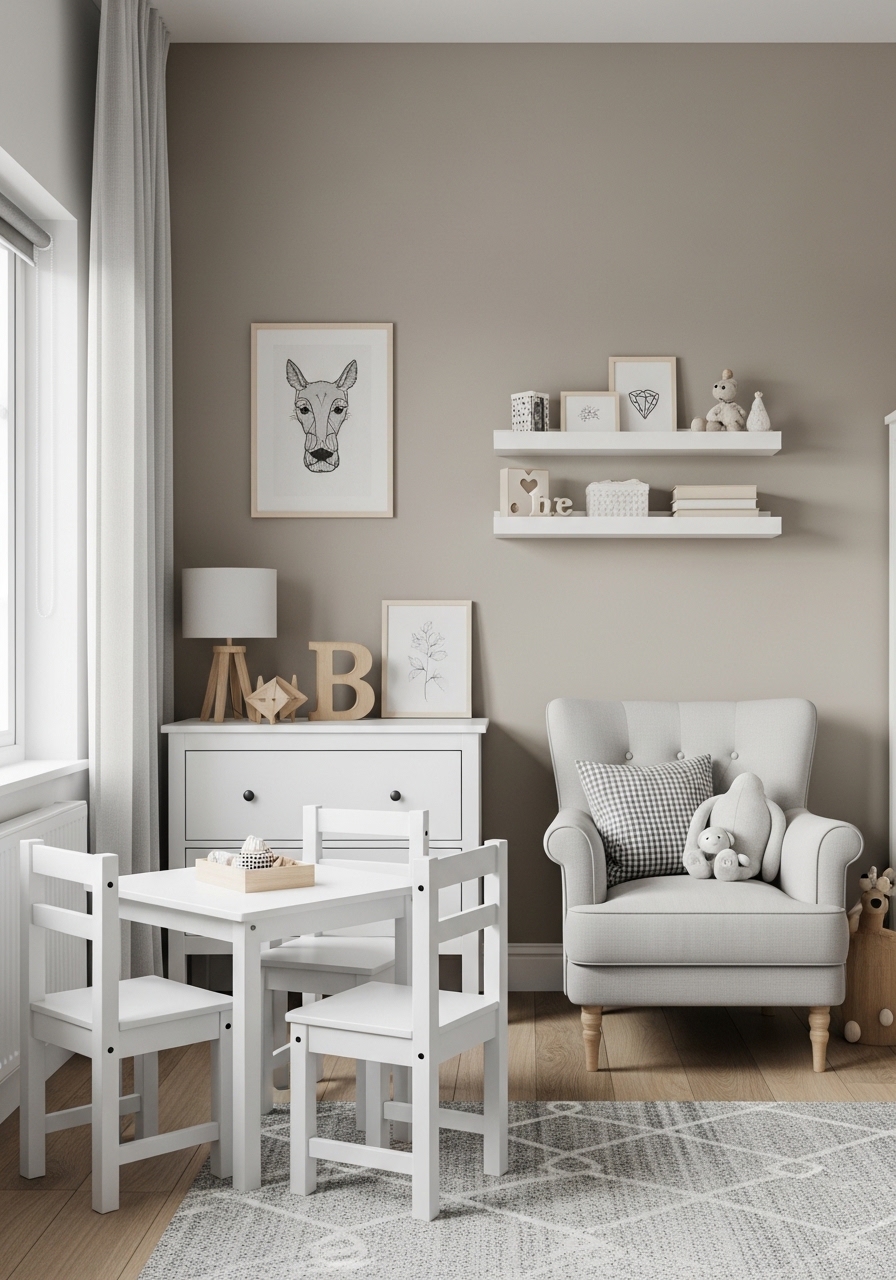
I step back. Walk through. Tug rugs straight.
Everything settles. No heavy side dominates.
Missed insight: empty corners kill flow. Fill lightly.
Steer clear of symmetry traps. Off-center feels natural.
Tweak pillows. Now it holds together.
Kids play easy. Room works.
Kid-Proofing Without Sacrificing Style
I learned fabrics matter. Canvas poufs wipe clean. Rugs low-pile shed less.
- Choose washable throws
- Skip glass tables
- Use felt bins for quiet play
Details like hooks keep coats off floor. Style stays.
Handling Clutter in Real Time
Baskets hide 80% of mess. I sort nightly.
- Toys in one
- Books in another
- Blankets folded loose
Train kids to drop in. Habit builds calm.
Scaling for Growing Kids
As they age, swap prints. Shelf holds games now.
It adapts. No full redo.
Start simple. Add later.
Final Thoughts
Try one step today. Clear the floor. See the shift.
You've got this. Small rooms hold big comfort.
It feels right when kids settle in easy.