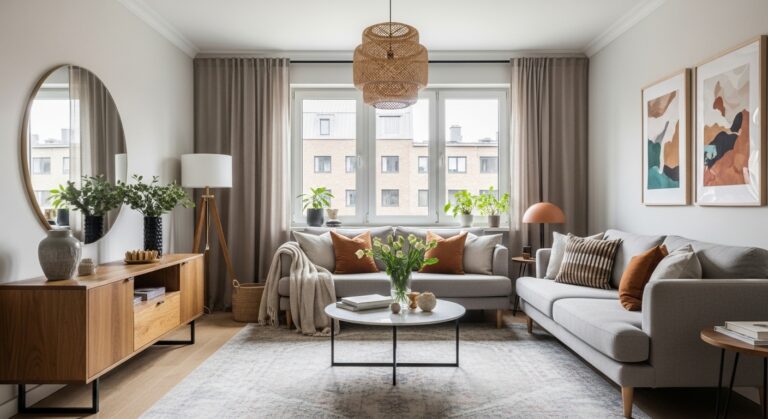
How to Make Living Room Rug Beautiful
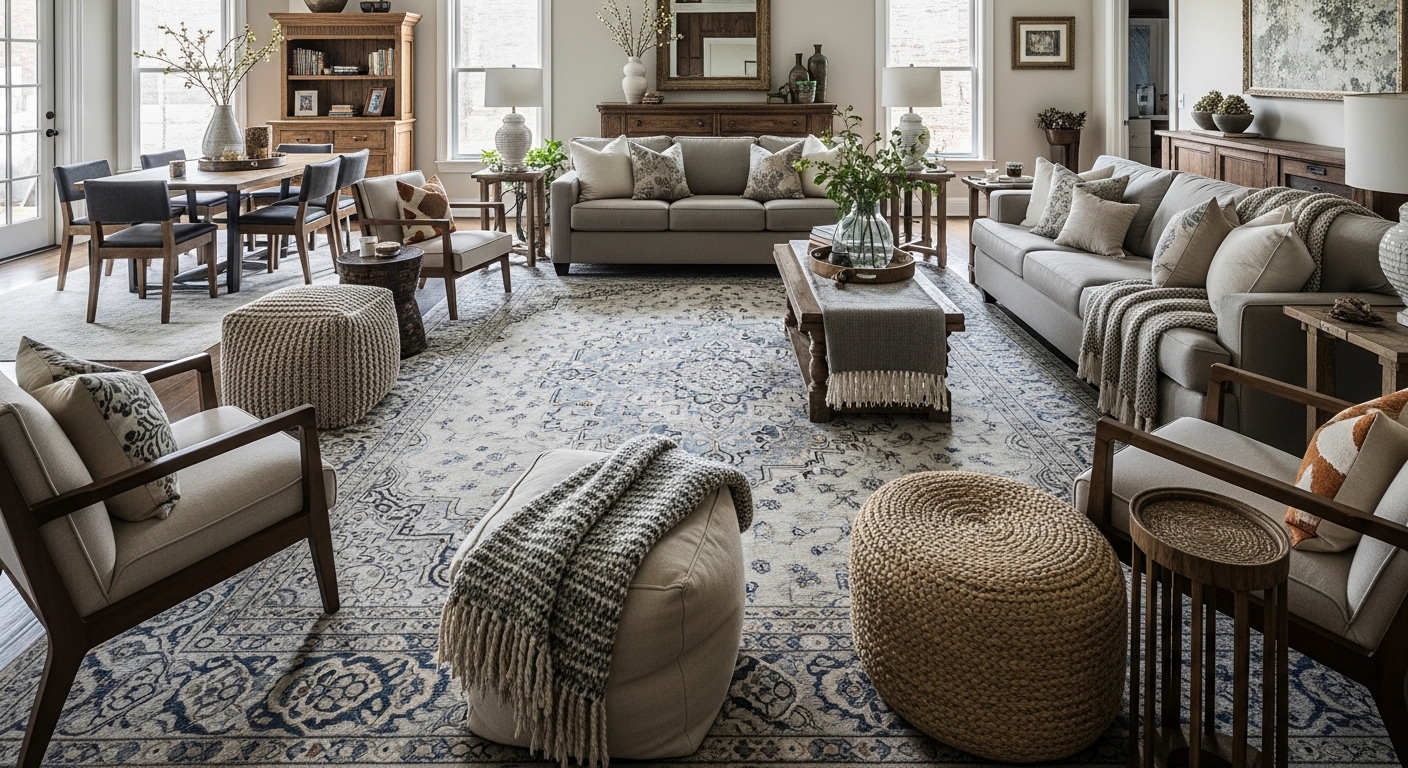
I stared at my living room rug one afternoon. It sat there, too small, floating in the middle like it didn't belong. The room felt choppy, unbalanced.
I'd tried pushing furniture around. Nothing helped. The rug just made everything look off.
Then I figured it out. A few changes in placement and feel fixed it. Now it grounds the space.
How to Make Living Room Rug Beautiful
This is the method I use every time a rug feels wrong. You'll learn how to place and balance it so the room flows. In the end, your living room will feel comfortable and whole. It's simple, from my own rooms.
What You’ll Need
- 8×10 wool rug in soft beige
- Low-profile coffee table (wood, 4×2 feet)
- 3-seater linen sofa in neutral gray
- Two side tables (round, oak, 18-inch diameter)
- Jute runner (2×6 feet)
- Faux sheepskin throw (4×6 feet)
- Ceramic vase (12-inch tall, matte white)
- Potted fiddle leaf fig (4-foot height)
- Four throw pillows (18-inch, cotton in earth tones)
Step 1: Pick a Rug That Fits the Room's Footprint
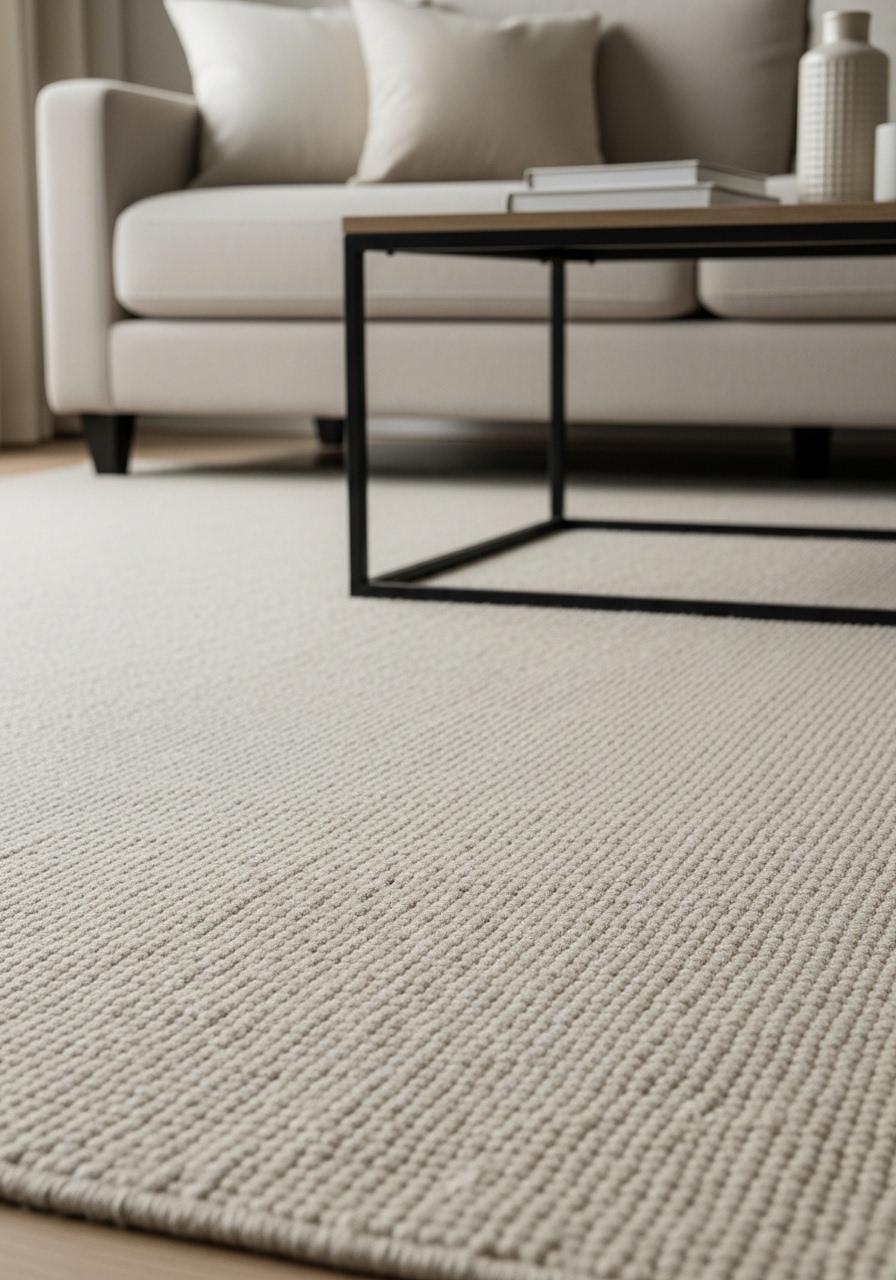
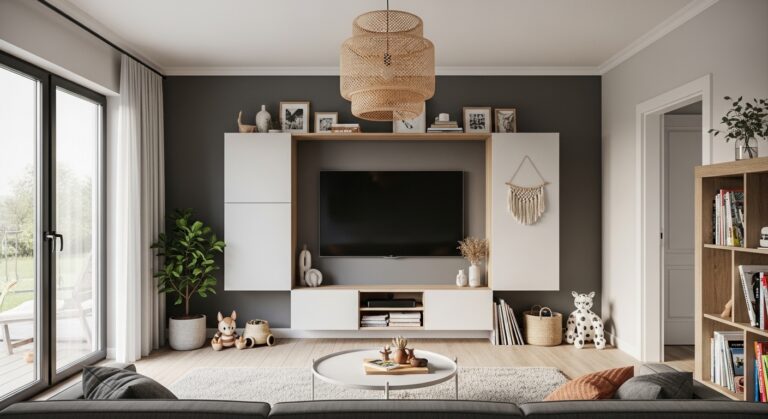
I start by choosing a rug that covers most of the room's main area. For my 12×14 living room, an 8×10 wool in soft beige works. It reaches under the sofa front legs and out to the sides.
This grounds everything. Visually, the floor disappears, and the room pulls together. People miss how a too-small rug splits the space—furniture looks like islands.
Don't center it perfectly. Off-center by a foot feels more lived-in. I learned that after my first try looked staged.
The change? The room breathes easier. Balanced.
Step 2: Position Under Key Furniture for Anchor
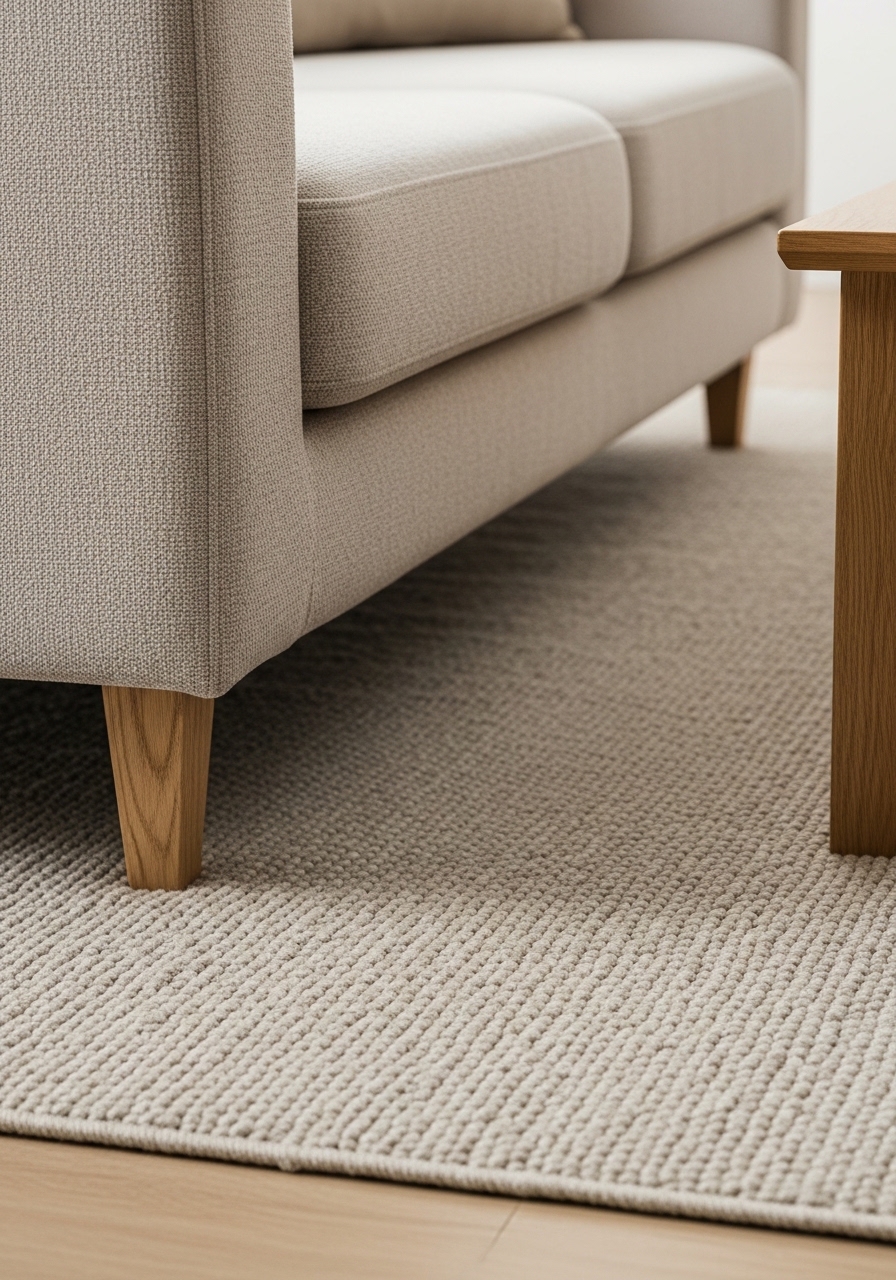
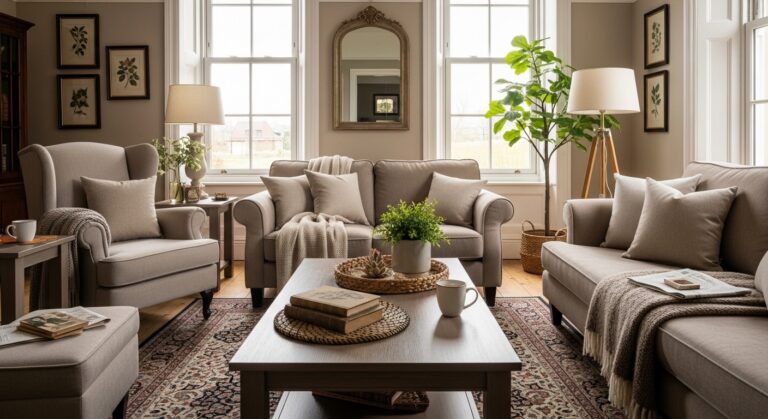
Next, I slide the sofa so its front legs sit on the rug. Coffee table goes fully on top. Side tables get two legs each.
Why? It creates flow—your eye moves from seat to table without breaks. The rug becomes the base, making the setup feel stable.
Most overlook pulling chairs in too. I keep them off to avoid crowding. Mistake: all furniture fully on. It shrinks the room.
Now, paths feel open. The space warms up.
Step 3: Layer Textures on and Around the Rug
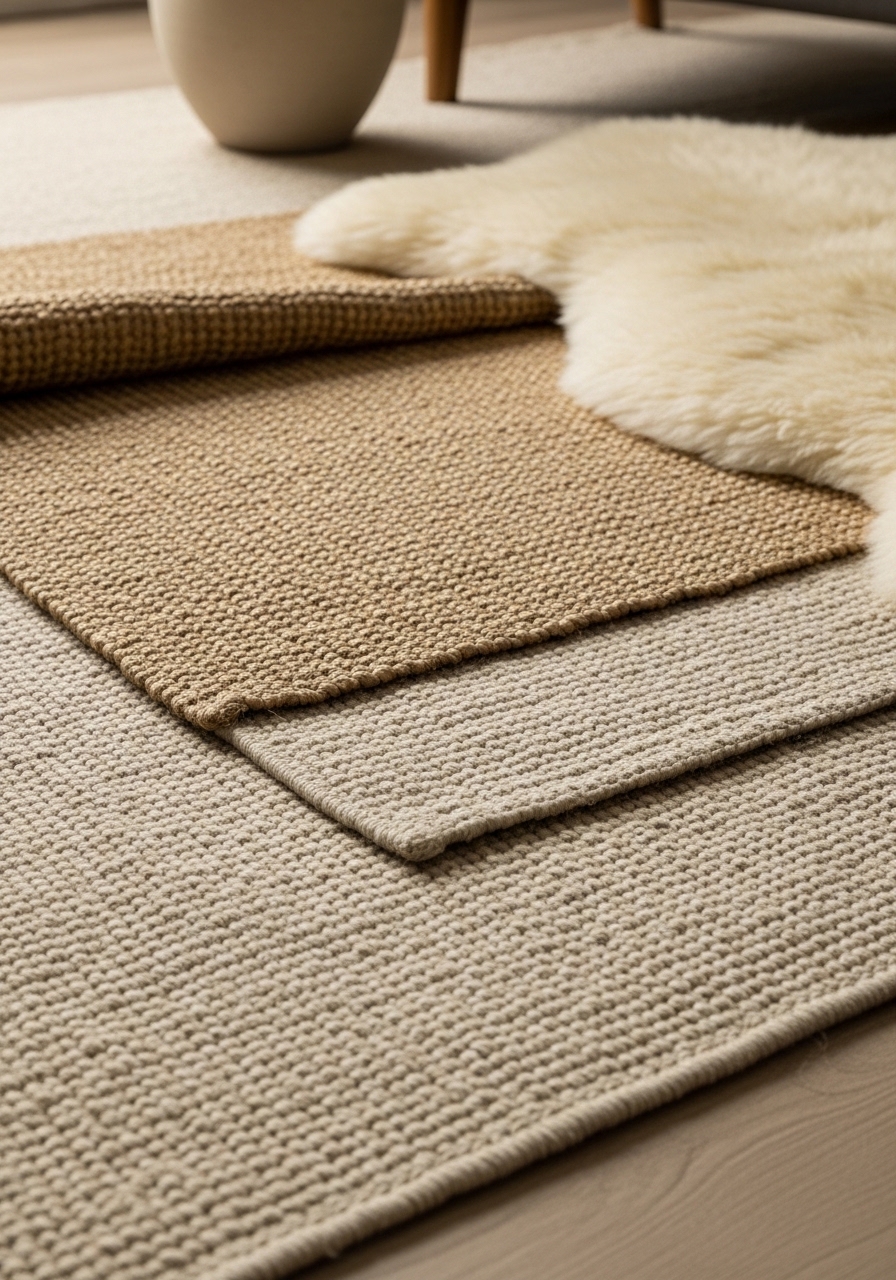
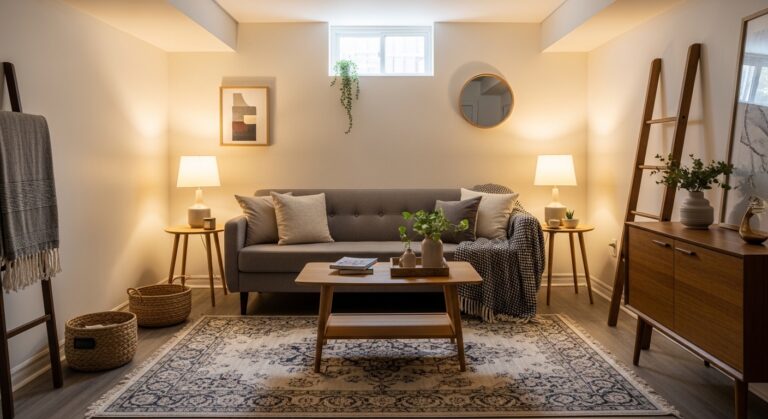
I add a jute runner at the entry and a sheepskin throw near the sofa. They overlap the edges slightly.
This builds depth. Flat rugs look dull; layers make it inviting. Insight: textures echo without matching colors.
Avoid piling too much center. It muddies the clean lines. I space them out.
Visually, the rug gains life. Comfortable underfoot.
Step 4: Balance Colors with Surrounding Pieces
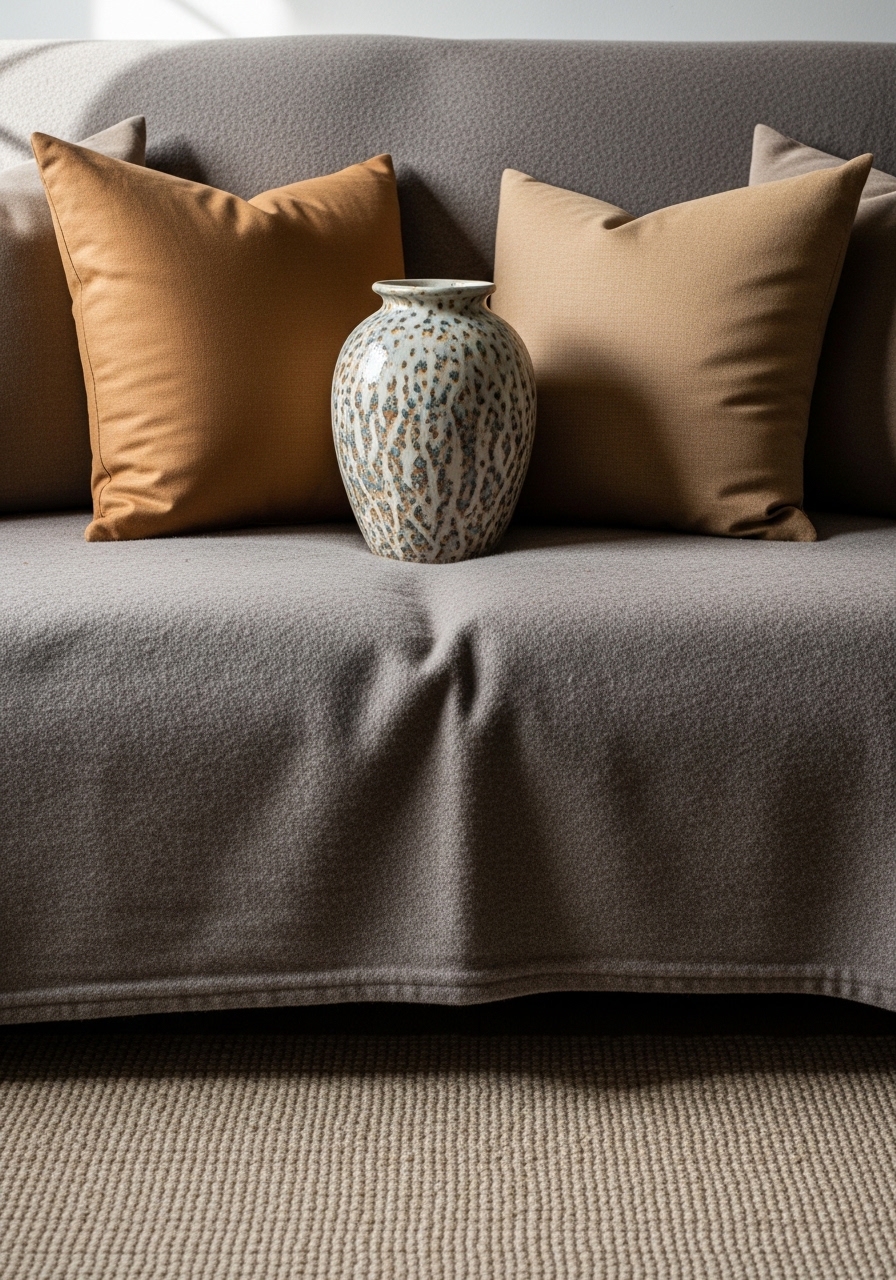
Pillows in muted greens and taupes on the sofa tie to the rug's undertones. A white vase sits on the coffee table.
It prevents clash. The rug blends, not fights the walls or upholstery. People miss subtle repeats—like a beige thread in pillows.
Don't overpower with bold patterns. Neutrals let it shine.
The room settles into harmony. Intentional flow.
Step 5: Add Height and Life at the Edges
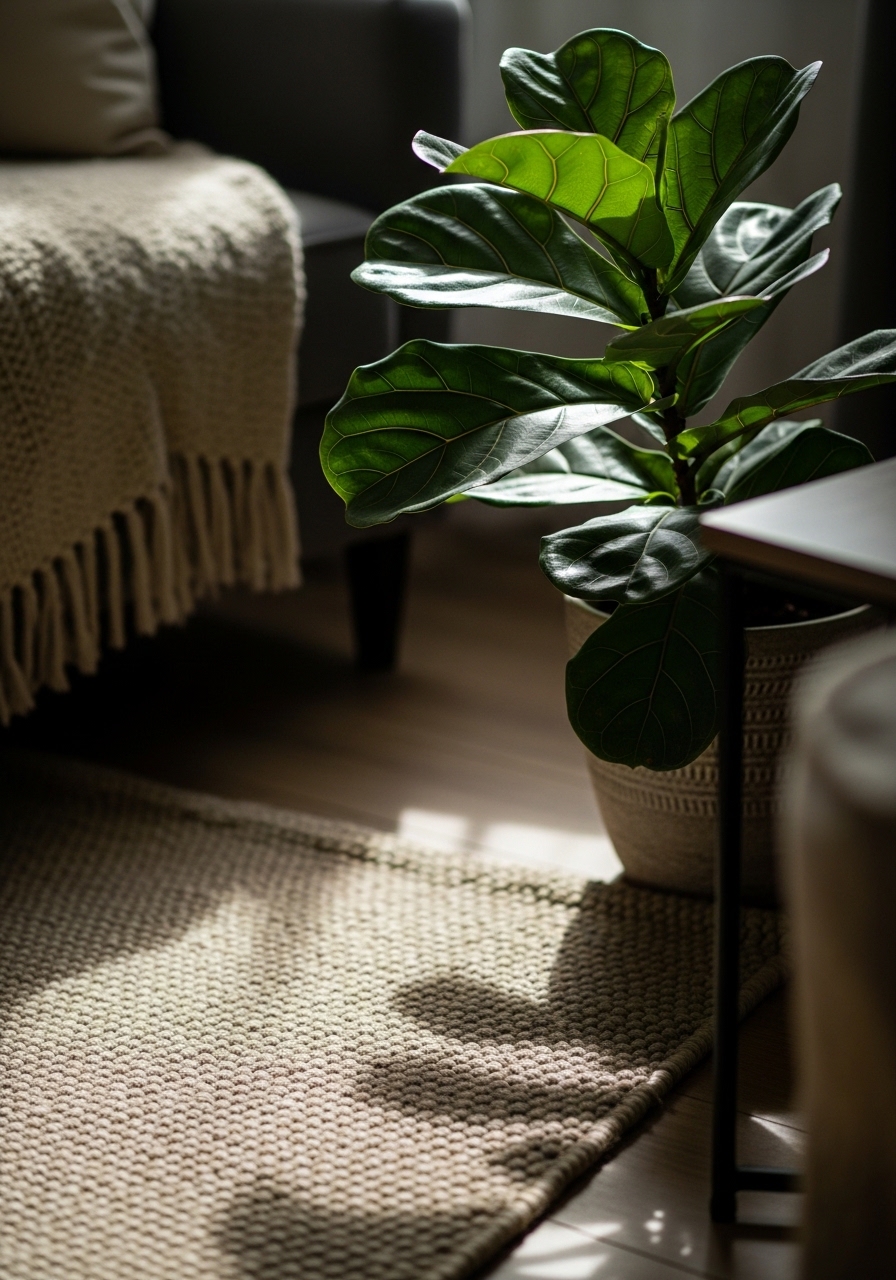
I place the fiddle leaf fig where rug meets bare floor. Side tables flank it.
Height draws eyes up, framing the rug. Edges feel finished, not abrupt.
Common miss: empty borders make rugs vanish. Avoid centering plants—they compete.
Now, the rug anchors without dominating. Balanced whole.
Common Rug Placement Mistakes I Fixed
I used to shove rugs under everything. It cramped my room.
Now I check twice.
- Sofa front legs only—keeps it airy.
- No rug under TV stand—avoids blocking paths.
- Test by walking: should feel natural.
These tweaks make space comfortable.
Pairing Rug with Wall Colors
Light walls pair best with my beige rug. It doesn't overwhelm.
Darker walls? Go lighter rugs for lift.
In my gray room, beige grounds it. Test swatches on the floor first.
Simple changes keep it clean.
Quick Ways to Refresh a Tired Rug
Vacuum weekly, spot clean gently.
Rotate every six months—wear evens out.
In summer, swap sheepskin for linen mat.
It stays fresh without effort.
Final Thoughts
Start with placement. Move one piece of furniture.
You'll see the shift right away.
Your rug will feel right, the room settled.
It's these small feels that make living there better.