How to Save Space in a Small Bedroom for Storage Easily
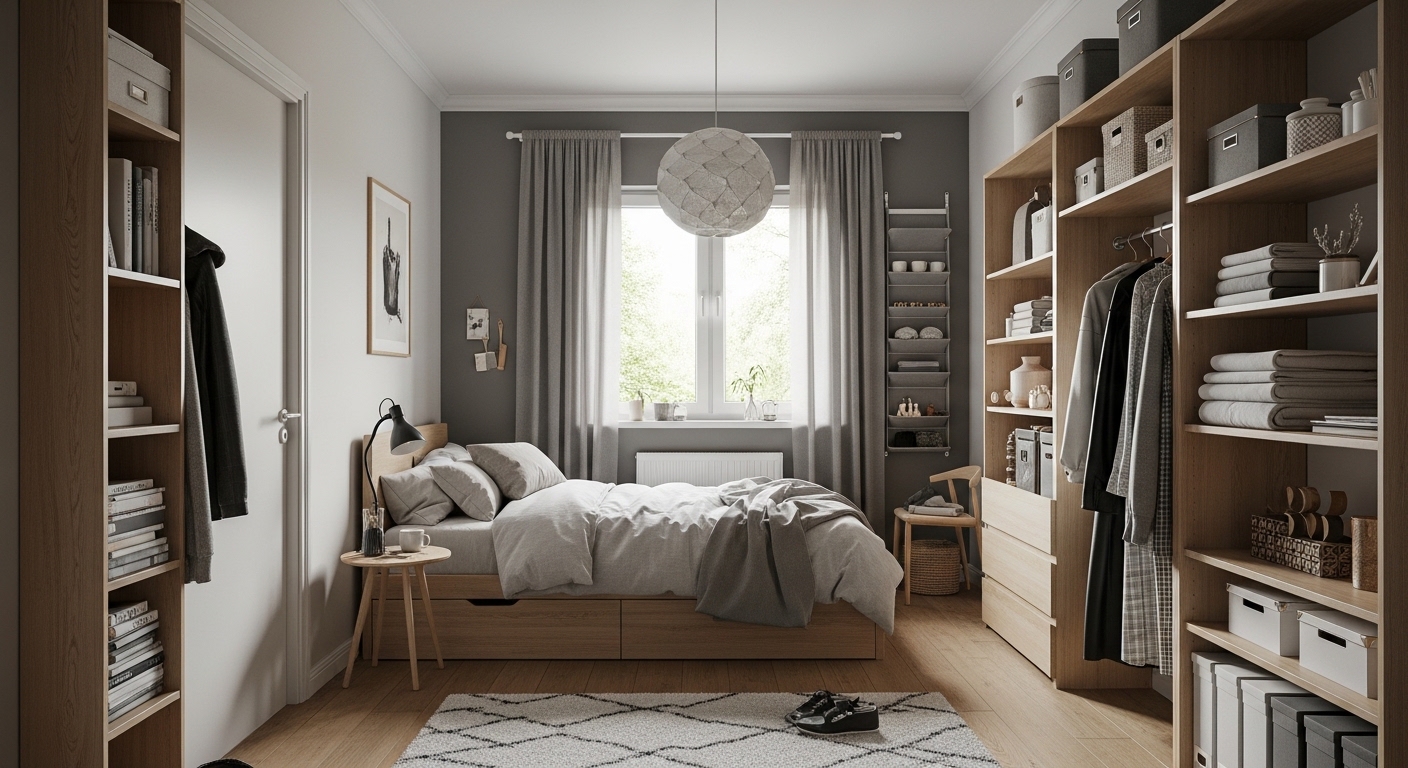
My small bedroom always felt tight. The bed pushed against the walls. Clothes piled on the chair. No spot for shoes or books. I could barely walk around.
I tried stuffing more into the dresser. It just made things worse. The room closed in.
One weekend, I changed that. Now it breathes.
How to Save Space in a Small Bedroom for Storage Easily
This method clears floor space and tucks storage where it fits best. You'll end up with a room that feels open and comfortable. Everything has a place, without crowding.
What You’ll Need
- Four clear plastic under-bed bins (19×28 inches, stackable)
- Two floating wall shelves (24-inch span, white oak finish)
- Slim metal garment rack (60-inch height, matte black)
- Over-door shoe organizer (24-pocket, clear vinyl)
- Storage ottoman (36-inch wide, beige linen)
- Set of six wall-mounted hooks (brass finish, holds 10 pounds each)
Step 1: Clear the Floor First
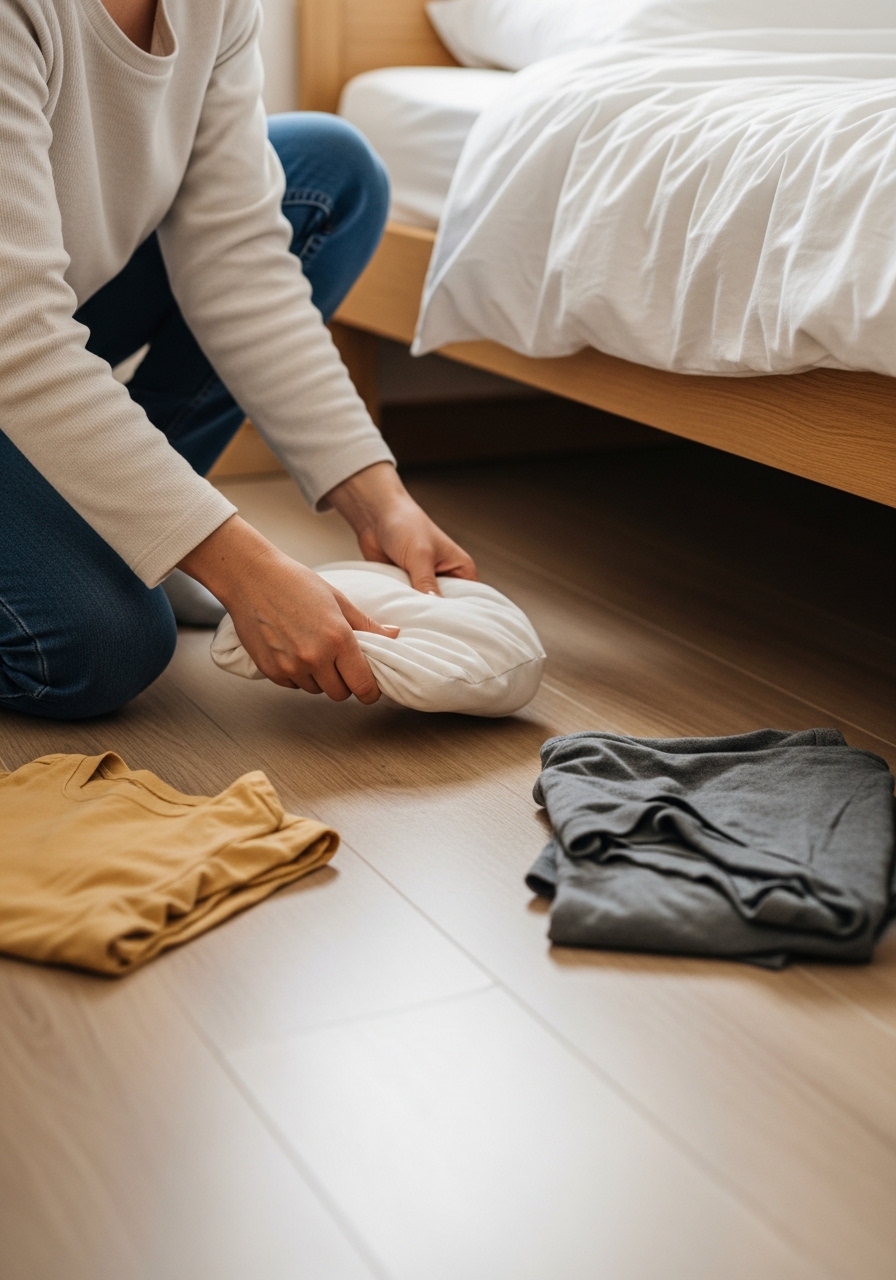
I start by pulling everything off the floor. Clothes go into a laundry basket. Random boxes to the bed. This opens up the room right away.
Visually, the floor shows. Light hits it evenly. The bed stands alone, not jammed against stuff.
People miss how much air this adds. It makes the walls feel farther apart. Avoid stacking piles on the bed—it blocks your path.
Now the space feels lighter. I can think clearly about where things go.
Step 2: Slide Storage Under the Bed
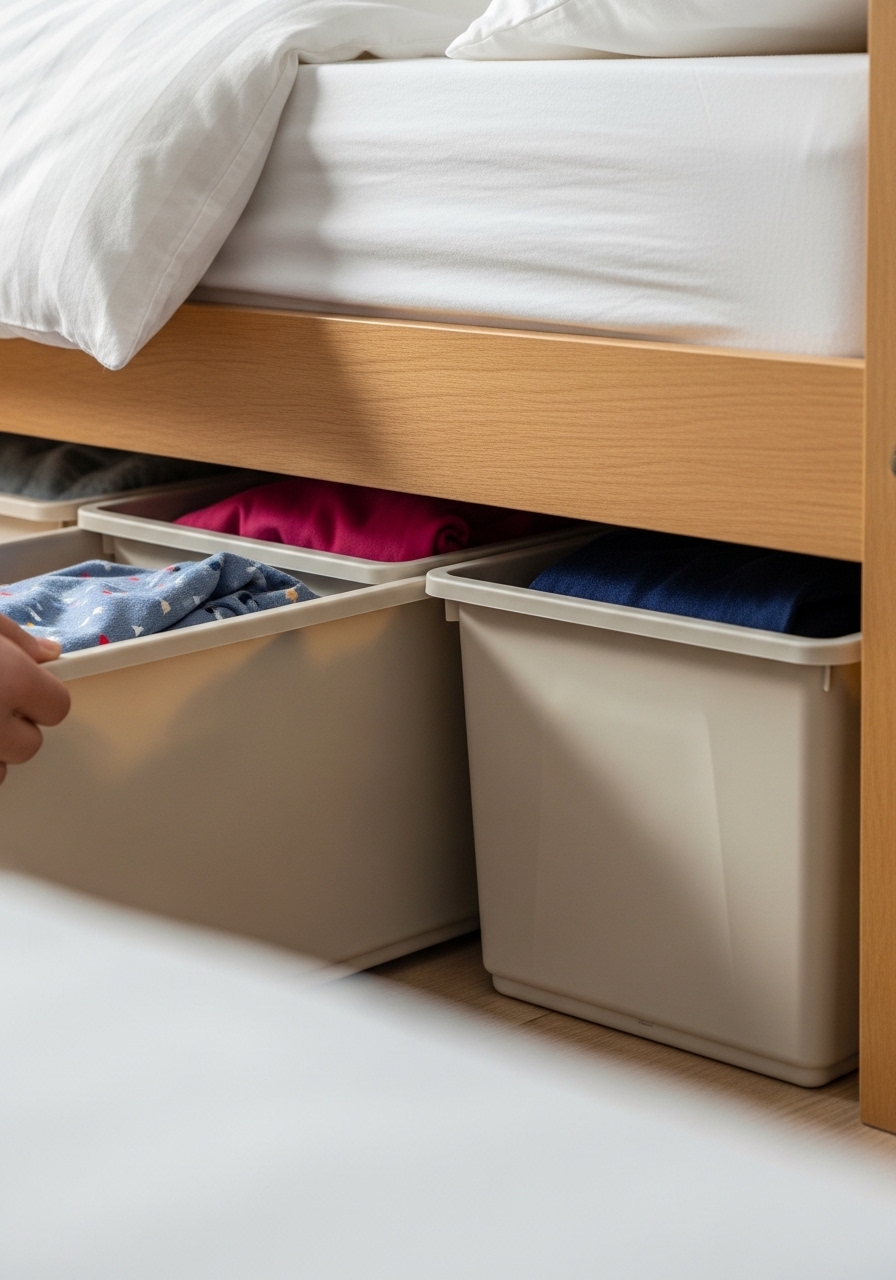
Next, I grab the under-bed bins. Fill them with folded clothes and linens. Slide them under the frame, even with the sides.
The bed looks the same from above. But below, seasons of clothes hide neatly. No dust bunnies show.
Most forget to measure first. Bin height matters—too tall, and they stick out. Don't overpack; leave room to pull one out easy.
This keeps the floor clean. The room flows better already.
Step 3: Hang a Slim Rack in the Corner
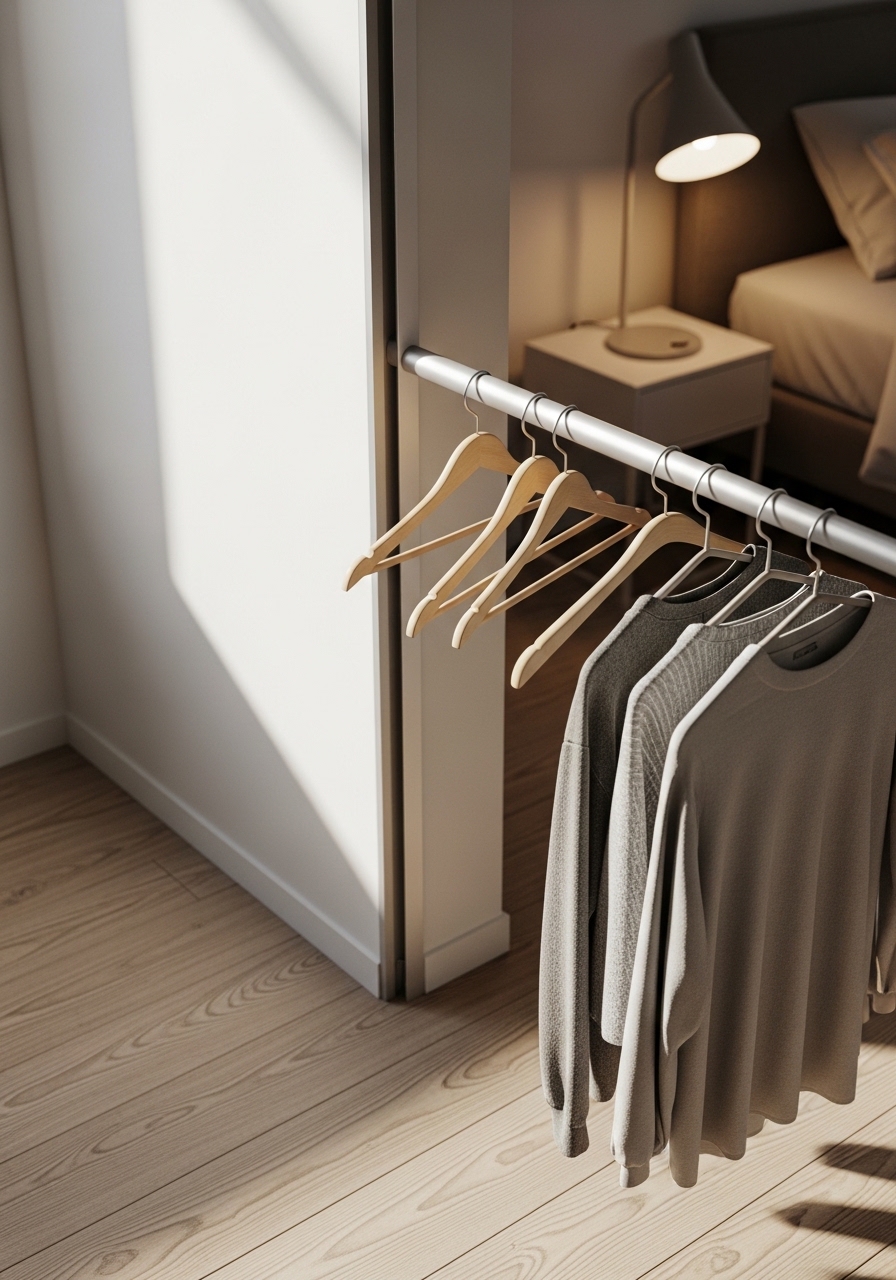
I pick the quietest corner. Set up the slim metal rack there. Hang daily outfits and jackets, spaced out.
That corner wakes up. It holds what you reach for most, without eating wall space.
Folks overlook corner dead zones. They stay empty otherwise. Skip bulky dressers here—they block light.
Balance it low so it doesn't loom. Now the room feels taller.
Step 4: Layer Shelves on the Wall
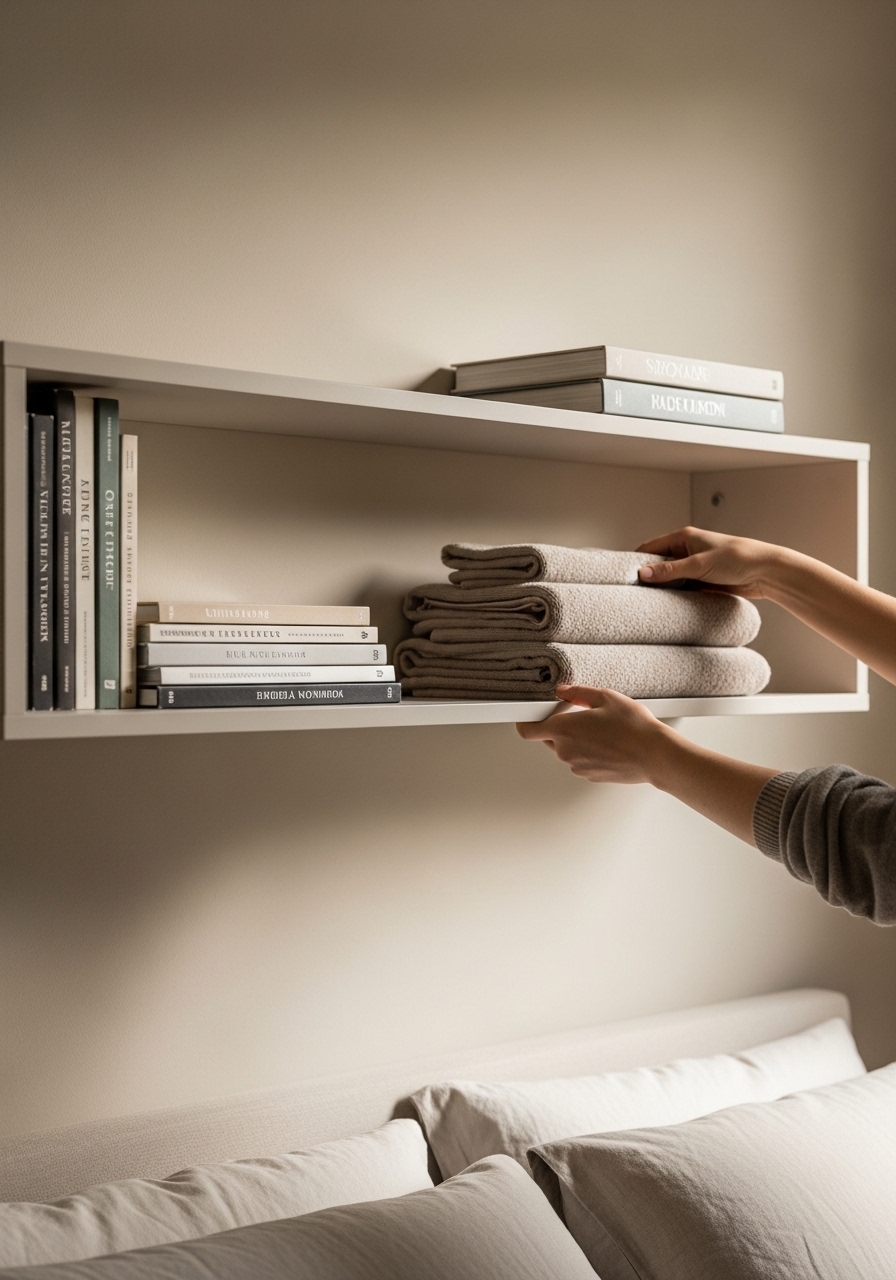
I mount the floating shelves above the headboard. One for books, one for bins of socks. Keep it to essentials.
Walls gain depth. Items sit forward, drawing the eye up. Bed stays the focus below.
The miss is overloading them. Too much looks cluttered. Avoid centering perfectly—slight offset feels lived-in.
This lifts storage off the floor. Space opens wide.
Step 5: Add Door and Ottoman Spots
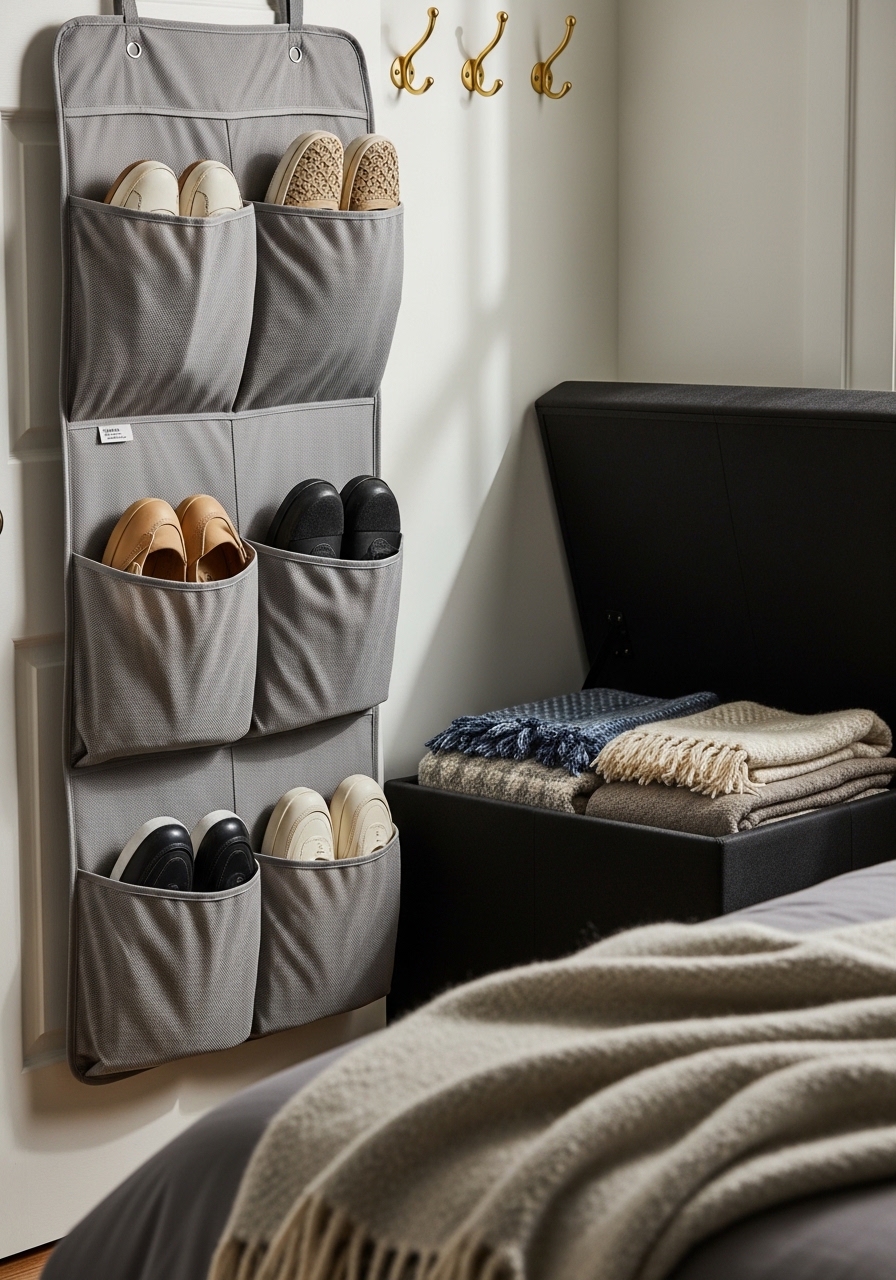
Last, hook the over-door organizer on the closet. Fill pockets with shoes. Place the ottoman at bed's foot for blankets.
Door hides shoes. Ottoman doubles as a seat. Both blend in.
People forget doors as storage. They swing free now. Don't cram the ottoman—it sticks when full.
Everything fits. The room settles comfortably.
Keeping Balance in Tight Spaces
I watch how pieces relate. The rack stays low. Shelves hug the wall.
This prevents one side from feeling heavy.
- Pull furniture away from walls an inch.
- Mirror heights across the room.
- Test by stepping back—does it pull even?
Balance makes small rooms comfortable.
Handling Odds and Ends
Extra bags or scarves go on hooks. Group by use.
Ottoman catches throws at night.
- Hooks at eye level for bags.
- Bins for small stuff like chargers.
- Rotate seasonal items under bed.
No stray piles form.
Refreshing Without Starting Over
Every few months, I empty one bin. Wipe dust. Swap what's inside.
It stays fresh.
- Check for forgotten items.
- Adjust shelf loads if sagging.
- Walk the room—feel the flow.
Small tweaks keep it intentional.
Final Thoughts
Start with the floor clear. One step leads to the next.
You'll see the change fast. Your bedroom holds more, feels less crowded.
It's simple living now. Just right for the space you have.