How to Combine Small Bedroom Colors Like a Designer

I stared at my small bedroom walls last year. They were white, but the room felt tight and cold. I added blue pillows. It got worse—choppy and busy.
Then I tried mixing colors my way. Neutrals first, then warms. Suddenly, it breathed.
You know that cramped feeling. This fixes it.
How to Combine Small Bedroom Colors Like a Designer
This method layers colors for balance in tight spaces. You’ll end up with a room that feels open and calm. It works because I’ve done it in my own place. No guesswork.
What You’ll Need
- Soft gray linen duvet cover (queen size)
- Crisp white cotton sheets
- Two mustard yellow velvet throw pillows (18-inch)
- Sage green linen curtains (floor-length, sheer)
- Cream wool rug (5×7 feet)
- Warm wood nightstand (24-inch height)
- Three muted beige framed prints (8×10-inch)
- Terracotta vase (10-inch, matte)
Step 1: Anchor with Neutrals
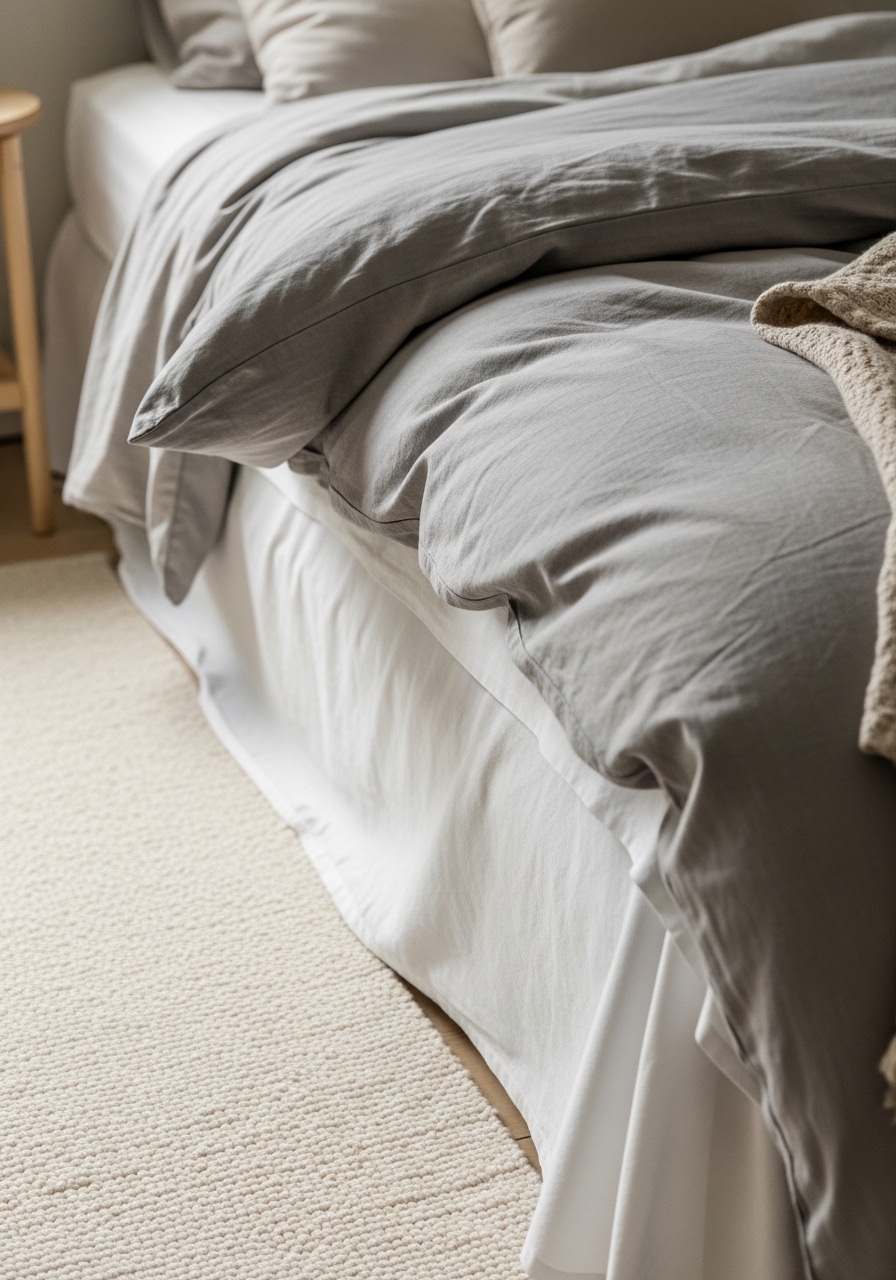
I start every small bedroom with neutrals—gray duvet, white sheets, cream rug. They ground the space. Without them, colors fight.
Visually, the room pulls back. Walls recede, bed looks settled.
People miss how neutrals let accents shine later. Don’t skip the rug—it softens edges. Avoid matching everything white; it flattens.
I layer the duvet smooth but lived-in. Sheets tucked light. Rug overlaps bed by six inches. Now it feels like a base you can build on. Steady.
Step 2: Introduce One Warm Accent
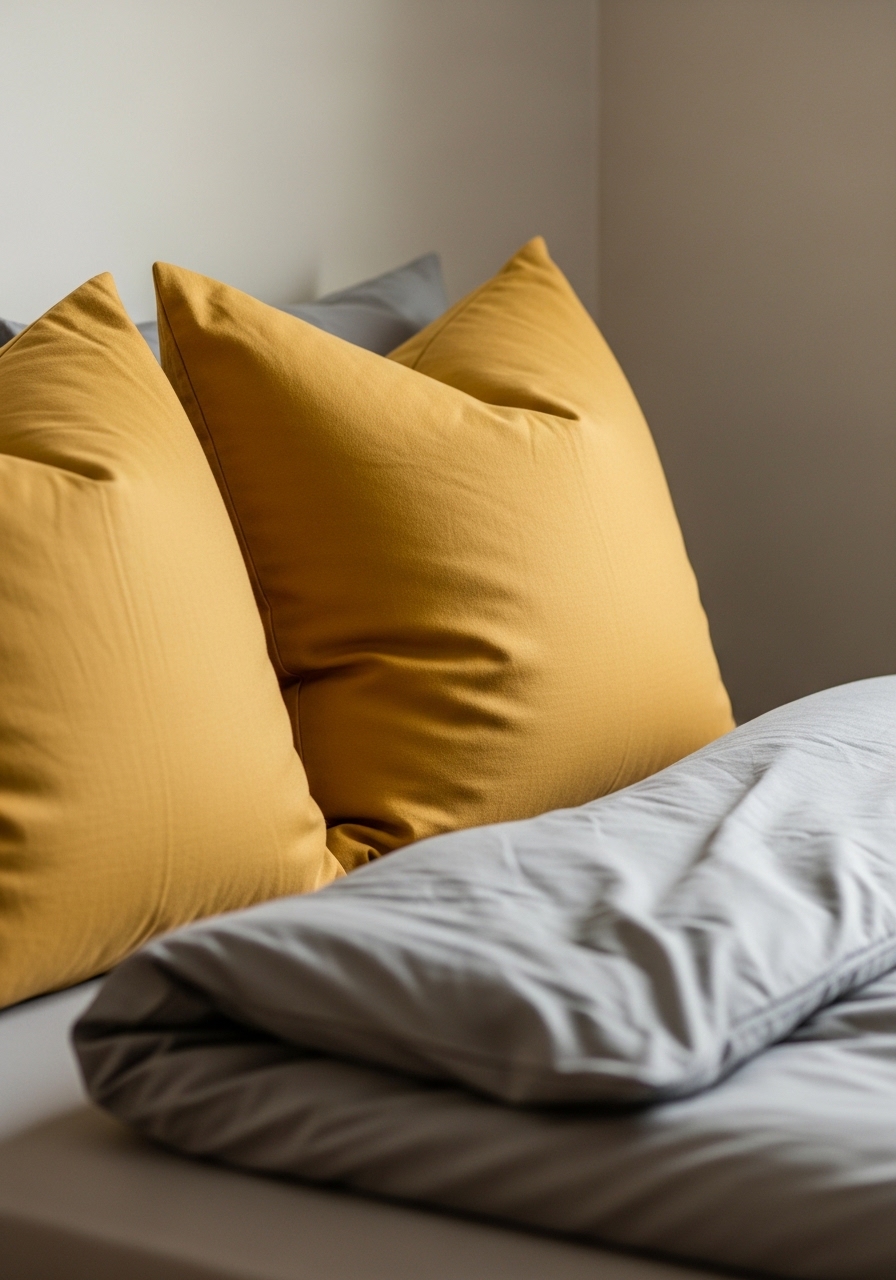
Next, I add mustard yellow pillows on the bed. One warm pulls the eye gently. It warms the grays without overwhelming.
The bed shifts from bland to inviting. Light bounces warmer.
Folks overlook pillow scale—too big crowds the bed. Mine are 18-inch, just right. Don’t overdo it with three colors here; stick to one.
I fluff them against the headboard, one upright, one soft. They nestle in. The room starts feeling balanced, like it has a heartbeat.
Step 3: Balance with Cool Tones
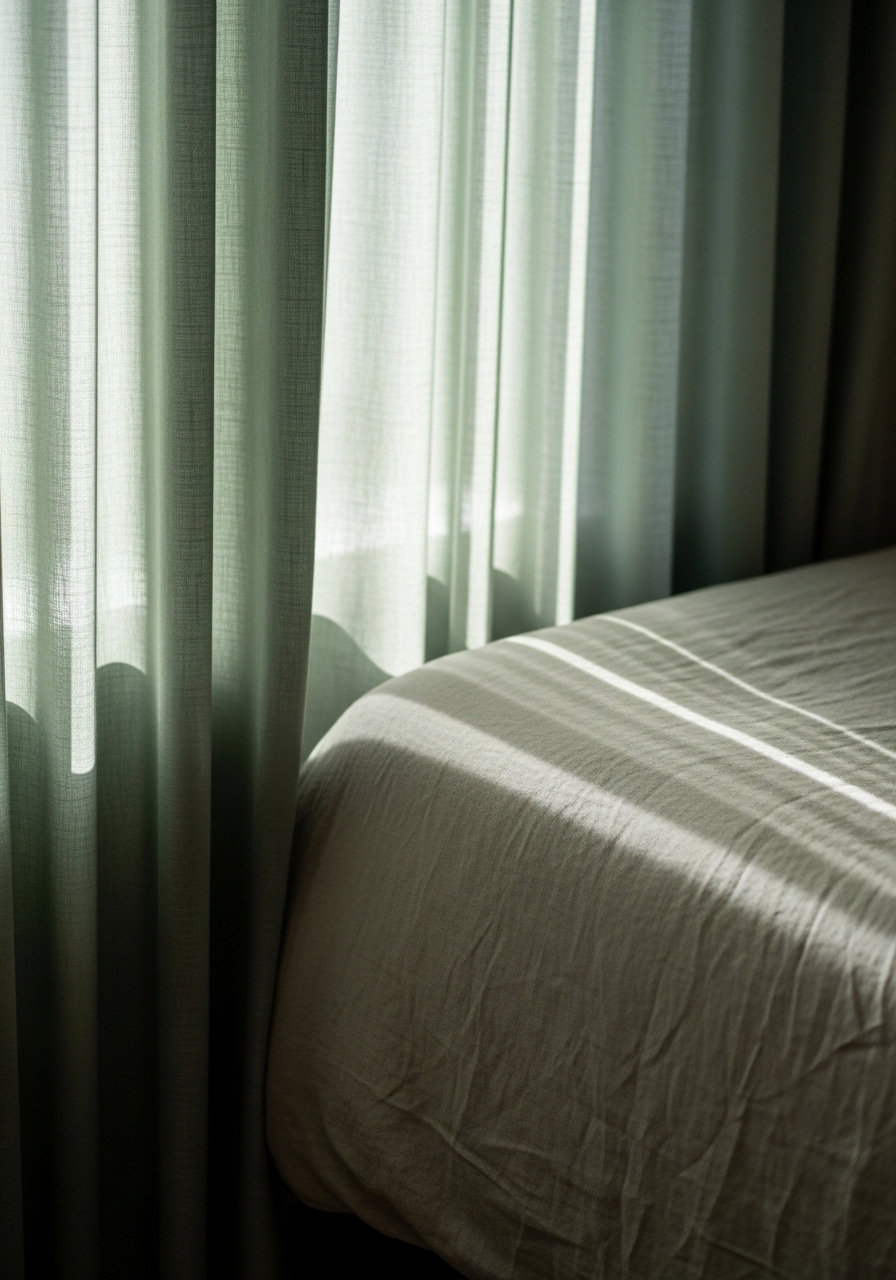
I hang sage green curtains next. Cool green calms the mustard warmth. It adds depth without shrinking the room.
Walls feel taller; light softens. The palette connects now.
Most miss curtain length—floor-length lifts the eye. Avoid short ones; they chop space.
Draped loose, not stiff. They frame the window. Balance settles in.
Step 4: Layer Wall Elements
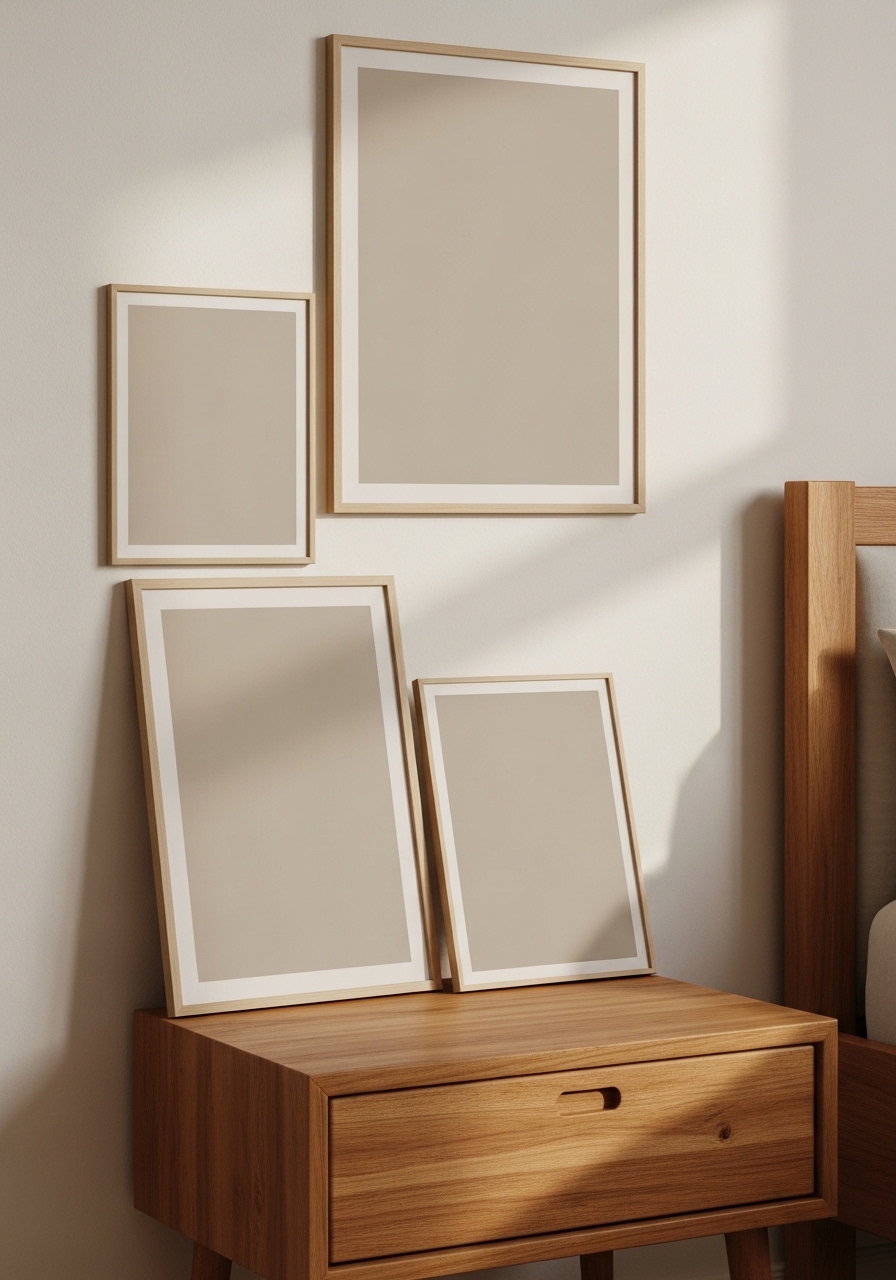
On the wall, I group three beige prints above the wood nightstand. They echo neutrals, tie warms together.
The corner stops feeling empty; eyes flow easy.
People hang too high—eye level keeps it cozy. Don’t center perfectly; slight offset feels lived-in.
Leaned, not nailed tight. Nightstand vase nearby. Walls breathe now.
Step 5: Settle with Textures
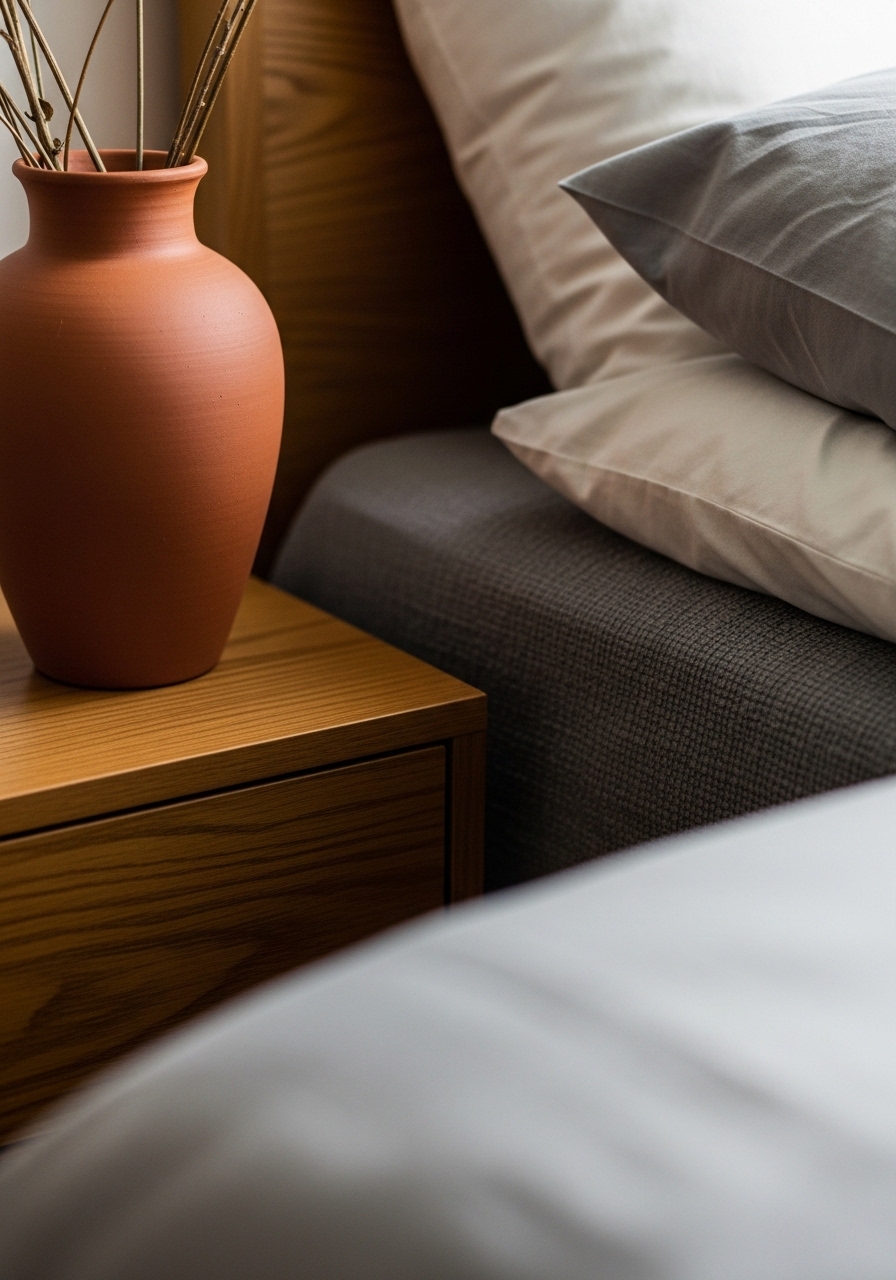
Last, I place the terracotta vase on the nightstand. Earthy tone links everything. Textures—linen, wool, wood—unify.
The room feels complete, intentional but easy. No flat spots.
Overlook texture at your peril; it makes color stick. Avoid shiny metals; they jar.
Stems loose inside. Step back. It’s balanced.
Why Neutrals Are Your Starting Point
Neutrals aren’t boring. In my small bedroom, gray and cream made space feel larger first.
They hold accents without clashing. I learned this after mismatched paints closed the room in.
- Gray duvet recedes walls.
- Cream rug softens floors.
- White sheets keep it clean.
Build from there. It’s simple.
Color Pairings That Fit Small Spaces
I stick to three tones max. Warm mustard with cool sage, grounded in gray.
Tested in my room—feels open.
- Mustard + gray: Adds sun without heat.
- Sage + cream: Cools and expands.
- Beige accents: Ties loose ends.
No more than that. Keeps it calm.
Handling Your Room’s Light
Morning light in my bedroom warms grays. North-facing? Lean cooler sage.
Observe at different times. Adjust pillows or vase shade.
It’s not set forever. Tweak as seasons shift. Feels right longer.
Final Thoughts
Start with your bed. Neutrals first. Add one color at a time.
You’ll see the shift—room opens, settles.
It’s not hard. Your small bedroom can feel this balanced. Just begin.