How to Design Kitchen Table for Kids Safely
I remember staring at our kitchen table after the kids turned it into a battlefield. Sharp corners banged knees. Crayons rolled under chairs. It felt tense, not welcoming. I wanted a spot where they could eat, draw, play—without me hovering.
One afternoon, I cleared it all. Started simple. Now it's calm. They use it daily. No more accidents.
How to Design Kitchen Table for Kids Safely
This shows you how I set up a kitchen table that's safe for kids. You'll end up with a balanced spot for meals and play. It feels comfortable, not rigid. Anyone can do it in a weekend.
What You’ll Need
- 48-inch round oak pedestal table with fully rounded edges
- Clear vinyl table protector (54-inch round)
- Cotton washable table runner in muted blue (12×72 inches)
- Non-slip silicone placemats (set of 4, neutral gray)
- Padded wooden stools (18-inch seat height, with backrests)
- Fabric corner bumpers (clear, adhesive, for stool edges)
- Low woven basket (12-inch diameter) for toys
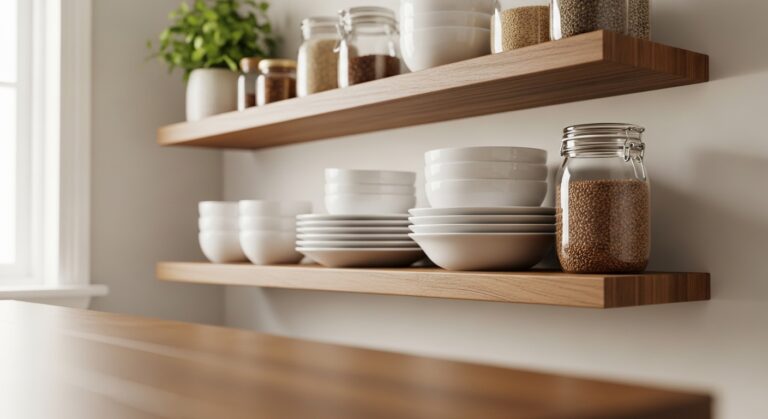
- Wall-mounted shelf (24-inch wide, 12 inches from table)
Step 1: Anchor with a Rounded Table

I always start by picking a round table. No corners to bruise little legs. Place it dead center in the kitchen flow, away from doors. Push stools in tight—18-inch height keeps feet dangling safe.
Visually, the room settles. Light hits the oak evenly. Kids see it as theirs now.
Most miss how height grounds everything. Too tall, and they climb. Avoid cramming against walls; it blocks quick moves if someone falls.
Step 2: Layer Soft Protection
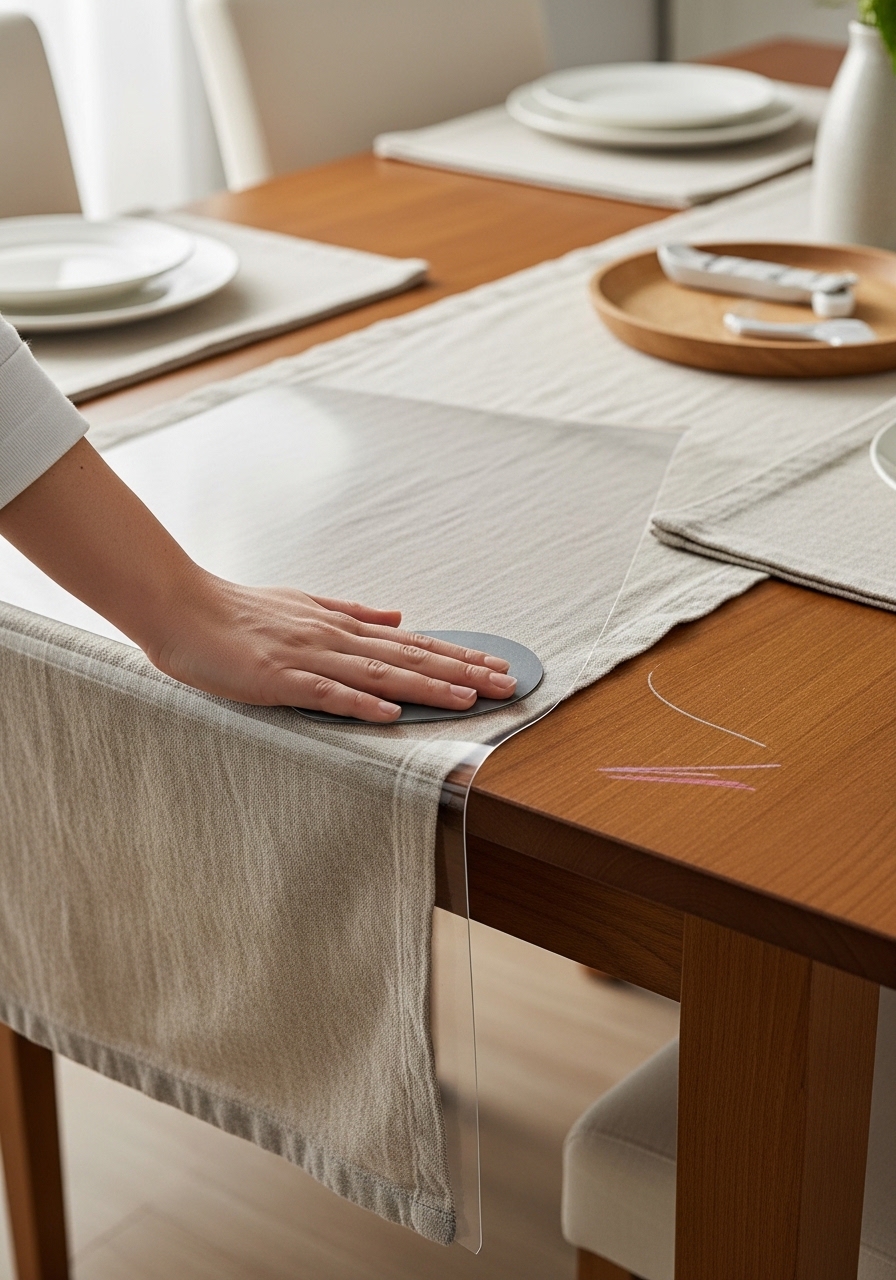
Next, I lay the vinyl protector flat. It catches spills without slipping. Drape the runner lengthwise—it softens the shine, adds grip under plates.
The table shifts from hard to inviting. Colors warm up, shadows play gentle.
People forget the runner's weight anchors it. Without, edges curl. Don't skip measuring; overhang less than 8 inches or kids pull.
Step 3: Position Stools for Easy Access
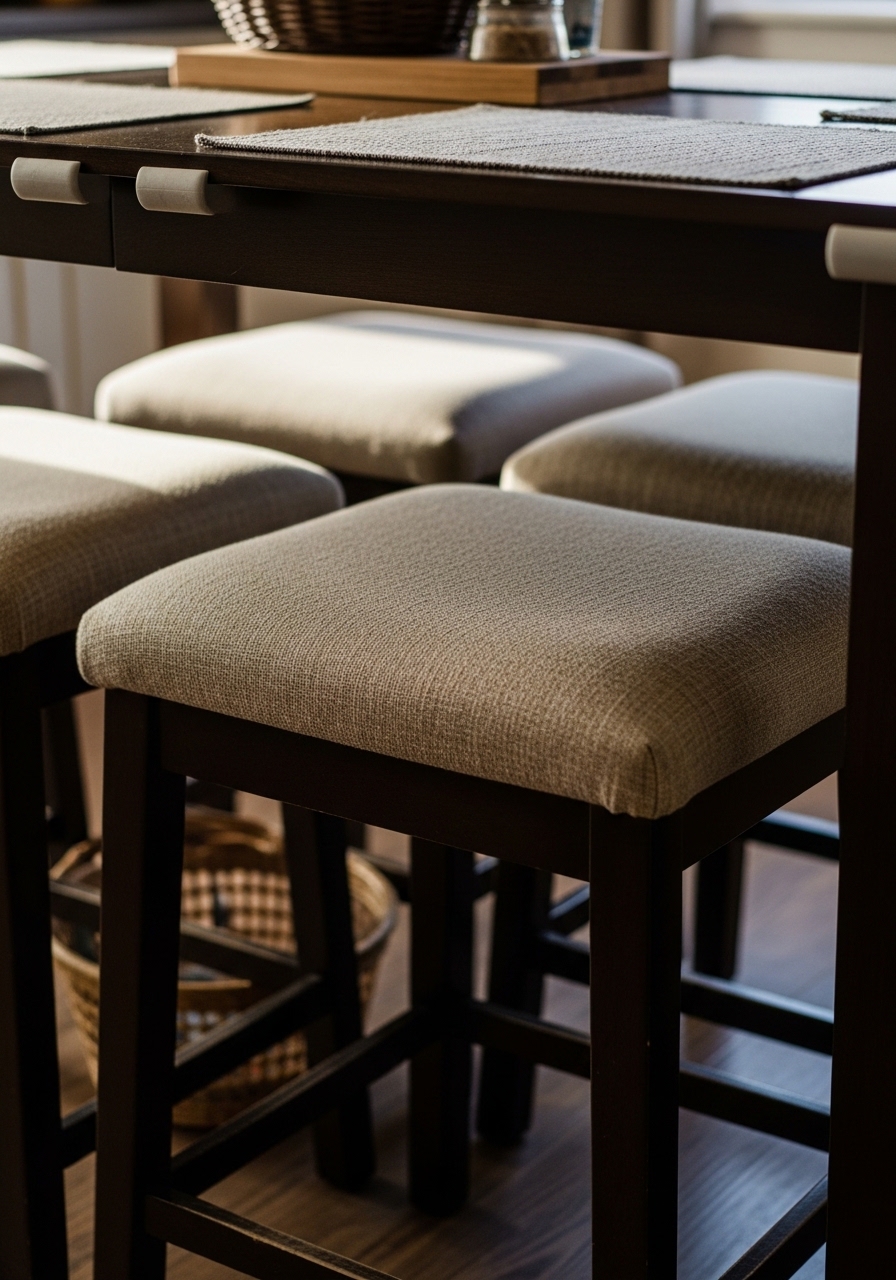
I space stools evenly—two feet apart. Add bumpers to edges. They scoot in smooth, no pinches.
Balance appears. Table feels full, not empty. Kids climb without wobble.
Insight: Backrests prevent backward tips—miss that, and chairs topple. Avoid metal frames; wood breathes, stays put.
Step 4: Add Nearby Storage
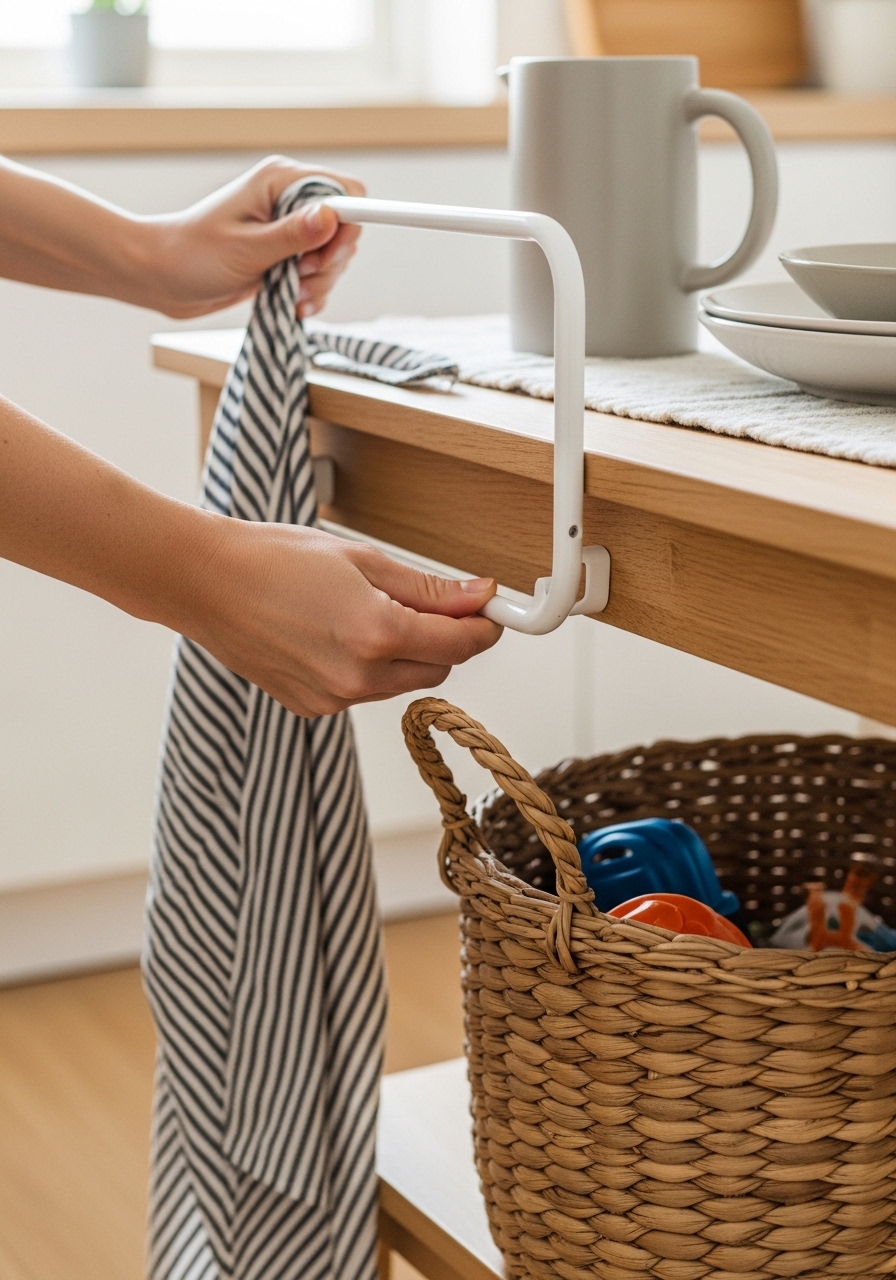
Hang the shelf at eye level, just above. Drop the basket beside one stool. Toys stay close, no floor mess.
Space flows open. Table breathes, less clutter.
Folks overlook reach—too high, kids grab wildly. Don't overload shelf; three bins max keeps it steady.
Step 5: Test the Full Setup
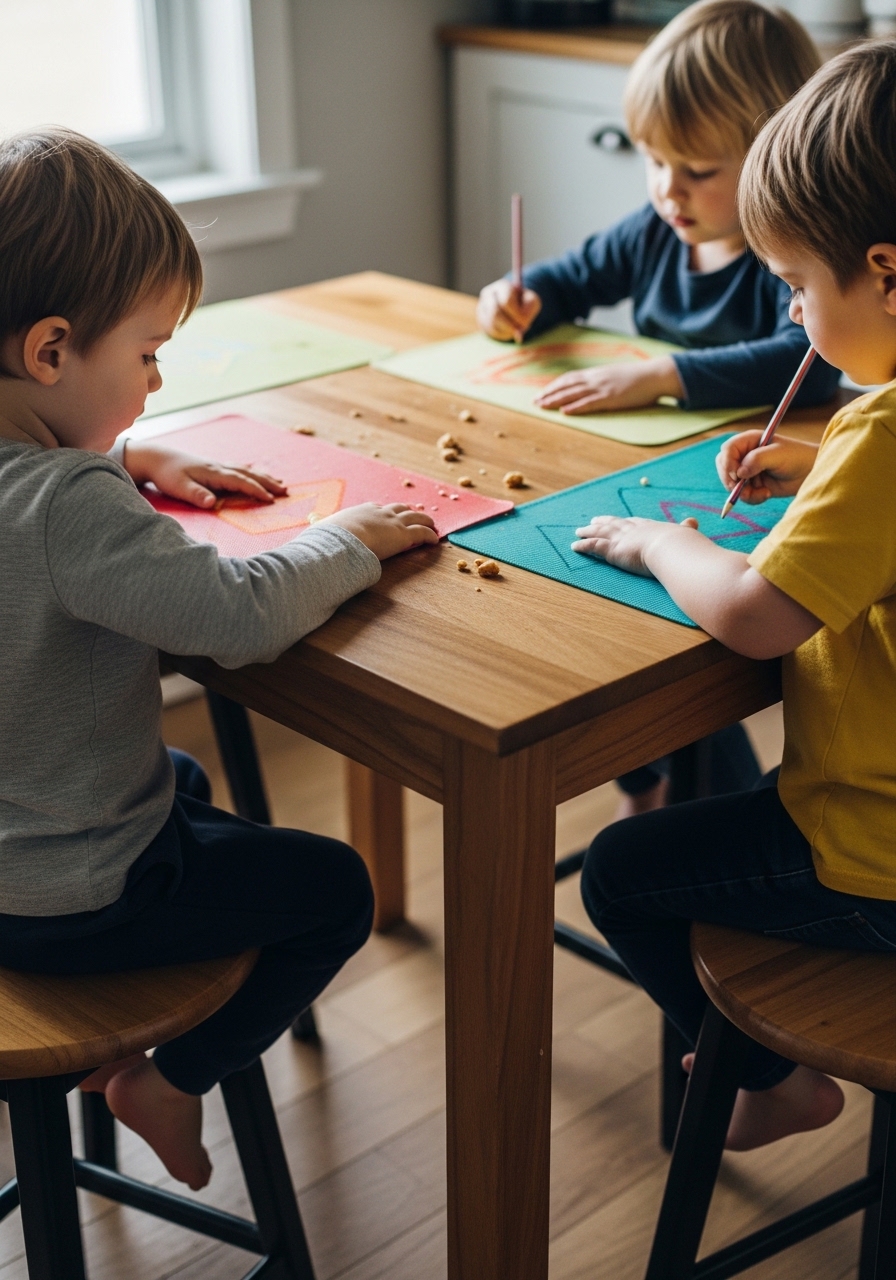
I sit with them, push-pull everything. Check sway, reach. Adjust runner if it bunches.
Final feel: secure, lived-in. Light bounces warm.
Common miss: real play reveals slips. Avoid loose rugs under; they bunch feet.
Age Adjustments for Growing Kids
I tweak as they grow. Toddlers need lower stools. Older ones get taller ones.
- Under 3: Add booster cushions, extra bumpers.
- 4-6: Remove boosters, add one shared basket.
- 7+: Swap for armless chairs, wider placemats.
Keeps it balanced. No big overhauls.
Everyday Cleaning Routines
Wipe vinyl daily with soapy cloth. Shake runner weekly. Bumpers peel off easy for wash.
It stays clean without effort. Feels fresh.
- Spot clean placemats in sink.
- Vacuum under table nightly.
- Basket linings swap monthly.
Simple habits last years.
When to Update the Setup
Watch for wear. Scratched wood? New protector. Outgrown stools? Measure hips.
Mine lasted three years before refresh.
Changes keep it comfortable. Listen to the space.
Final Thoughts
Start with just table and stools. See how it sits.
You'll feel the shift—safer, more used.
It's your kitchen. Make it work for them. Small changes stick.