How to Design Modular Kitchen Ceiling Beautifully
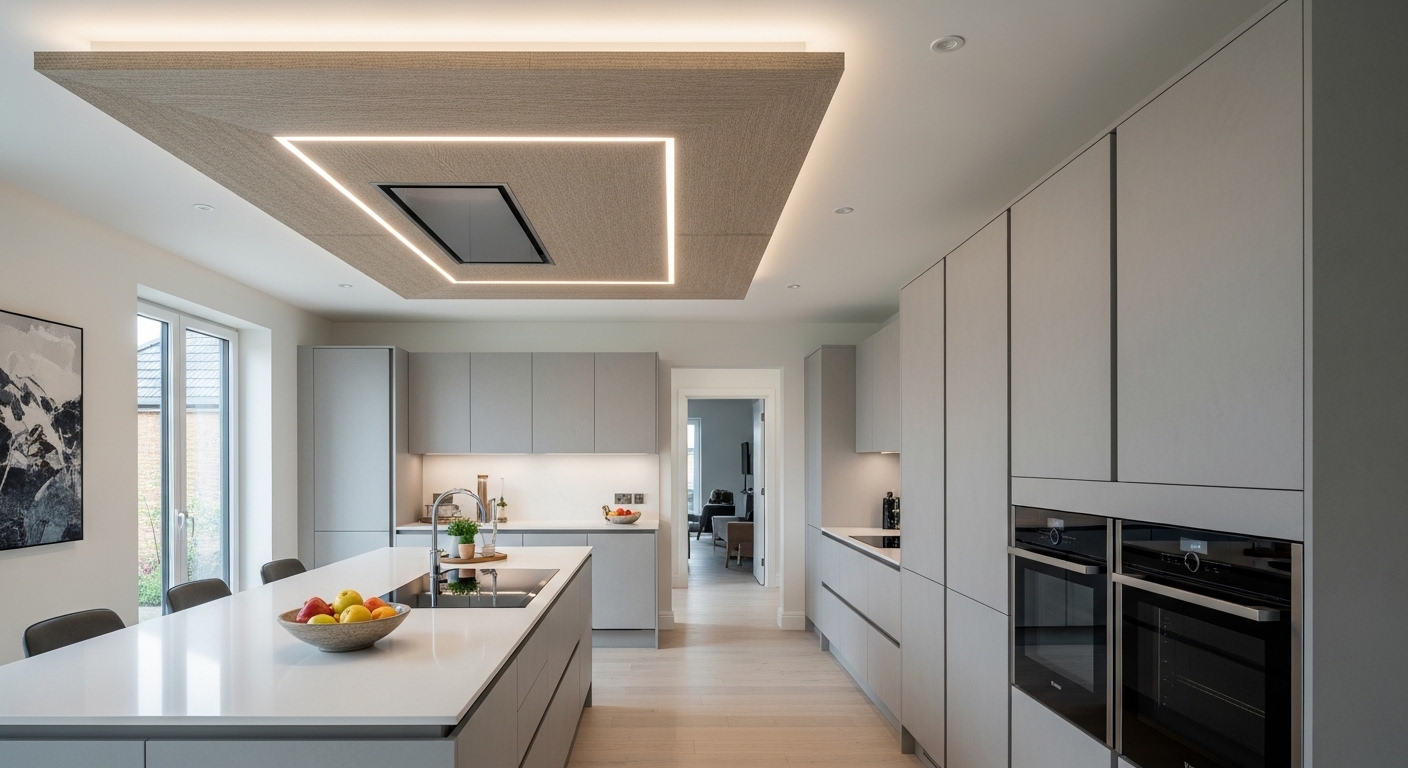
I stared at my modular kitchen ceiling. It was plain white, flat, and made the cabinets feel cramped. No height, no warmth. Pots hung below, but up top? Empty.
I'd tried paint. It didn't help. The room still felt closed in.
You know that squeeze? When the ceiling presses down instead of lifting the space.
How to Design Modular Kitchen Ceiling Beautifully
This is how I shape a modular kitchen ceiling to feel open and balanced. You'll end up with soft light layers and clean lines that make the whole kitchen breathe. It's straightforward, from my own fixes.
What You’ll Need
- Matte white gypsum panels (12×4 ft, 1/2 inch thick)
- Warm white LED cove strips (5m, dimmable)
- Slim recessed spotlights (3-inch diameter, matte black trim)
- Wood veneer tray (oak finish, 2×2 ft)
- Soft beige acoustic panels (24×48 inch sheets)
- Neutral ceiling paint (eggshell finish, low sheen)
Step 1: Map the Kitchen's Natural Lines

I start by standing back in the kitchen. I trace the cabinet tops with my eye. Where do they run? Straight? L-shaped? This sets the ceiling's frame.
It changes the feel right away. The ceiling stops floating. It hugs the layout. People miss how cabinets dictate flow—ignore that, and it looks slapped on.
Don't center everything perfectly. Offset to match the island or sink. That keeps it lived-in, not rigid.
Now the blank ceiling has purpose. It waits for layers.
Step 2: Layer Heights for Depth
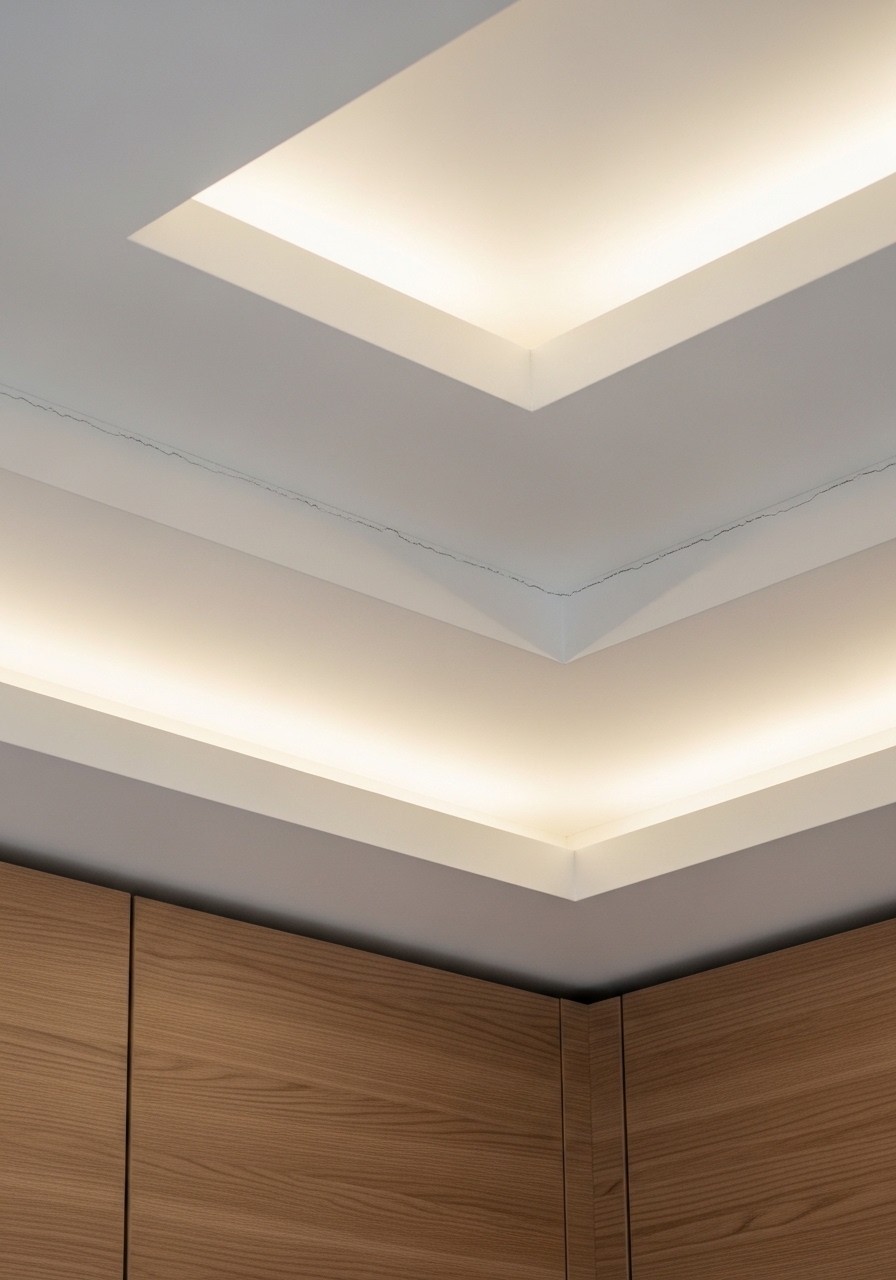
I drop panels in zones. Lower over the cooktop for focus, higher elsewhere. It pulls the eye around without overwhelming.
Visually, shadows play soft. Depth appears where there was none. The insight? Flat ceilings shrink modular units—layers make them feel custom.
Skip matching every drop exactly. A half-inch variance adds warmth. Test with tape first.
The space lifts. Cabinets nestle under now.
Step 3: Place Cove Lights Along Edges
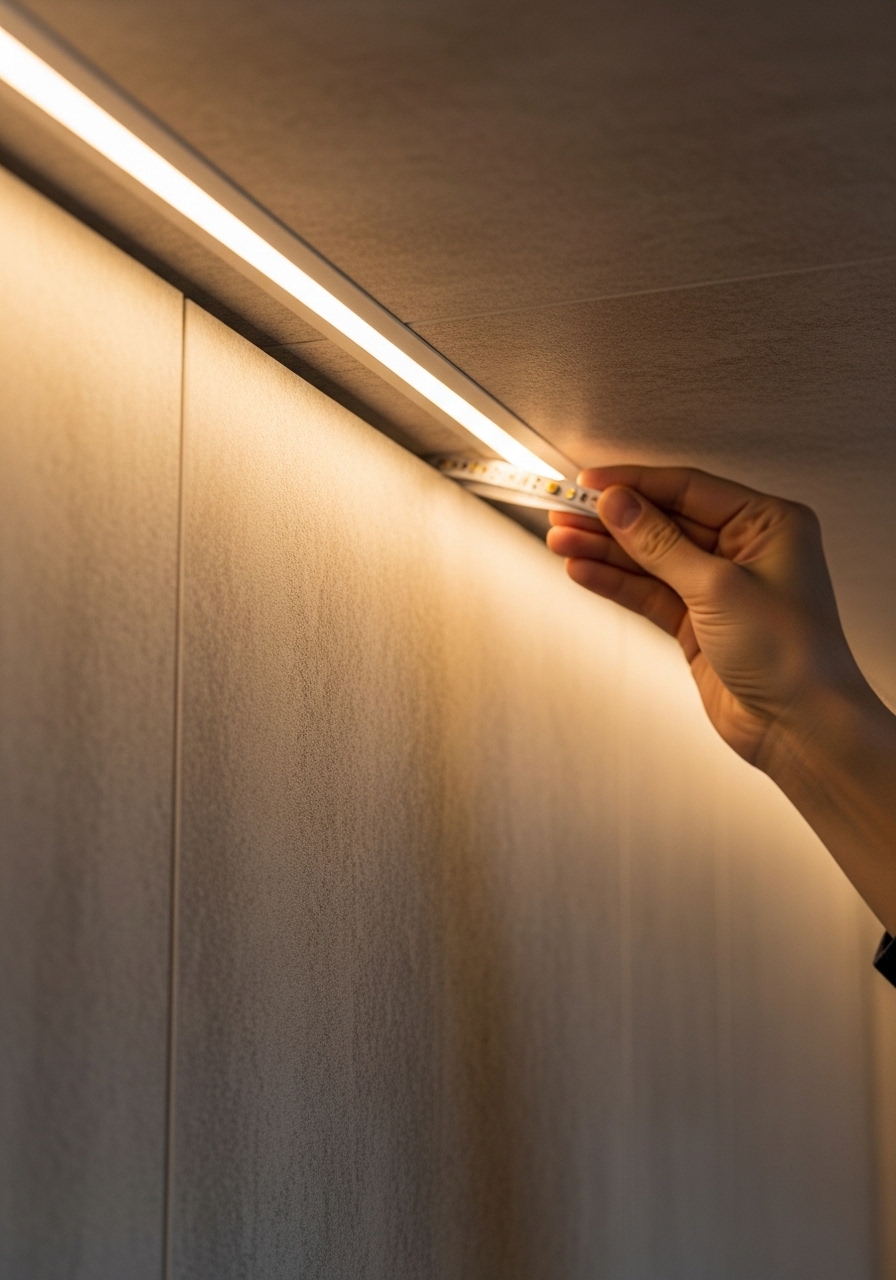
I tuck warm LED strips where panels meet walls or drops. Follow cabinet lines, not the room's square edges. Dimmable ones let me adjust.
Light washes down gentle. It outlines the modules without glare. Most overlook edge glow—it grounds the ceiling, makes it cozy.
Avoid full-room floods. They flatten everything. Start low, build up.
Now the ceiling recedes at night. Day holds clean lines.
Step 4: Add Recessed Spots for Tasks
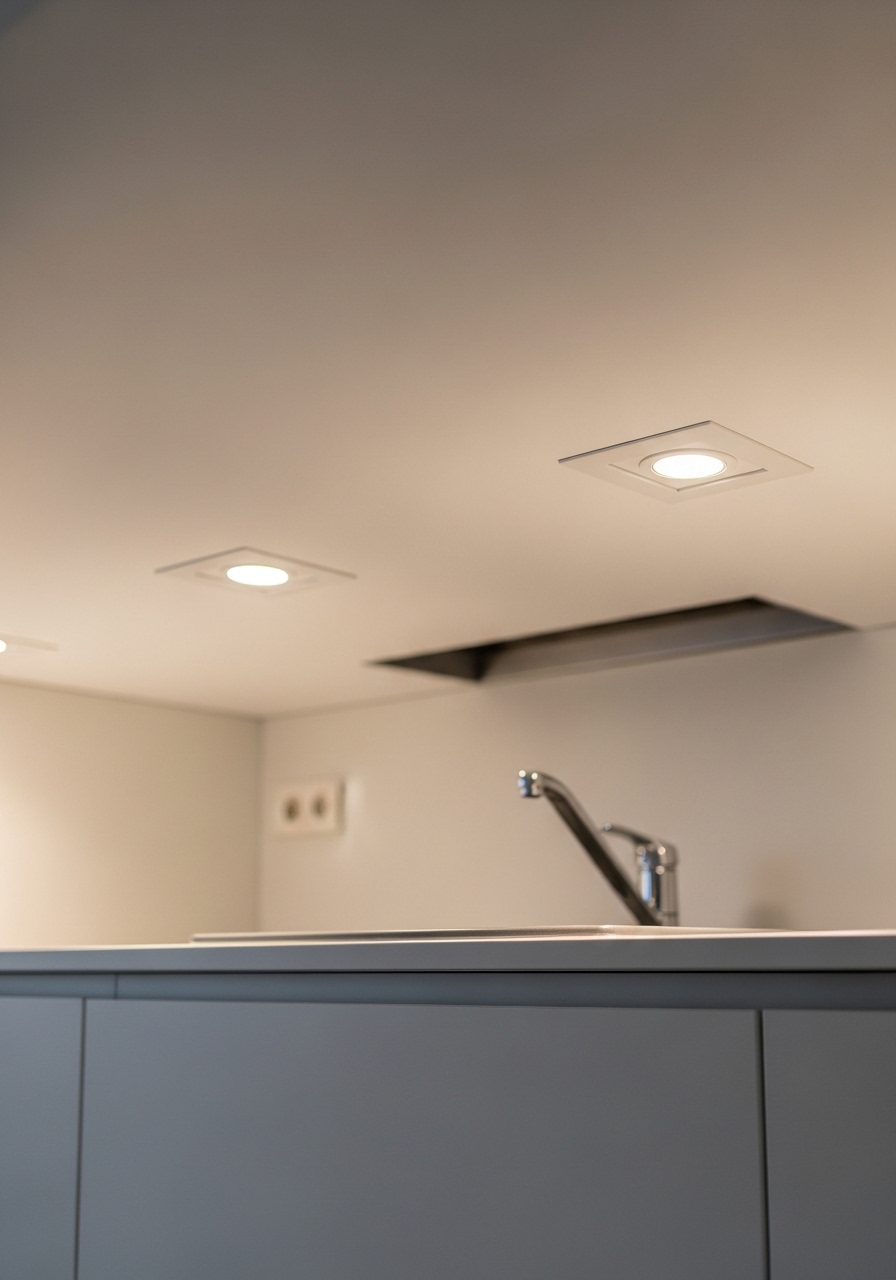
Over sink and prep areas, I drop slim spots. Three-inch ones, black trim to fade in. Space them 2 feet apart, aimed at work zones.
Beams hit exact. No dark corners. The miss? Task lights feel harsh alone—pair with cove for balance.
Don't overload. Four max keeps it simple. Check shadows on counters.
Kitchen works better. Ceiling supports, doesn't steal.
Step 5: Finish with Subtle Textures
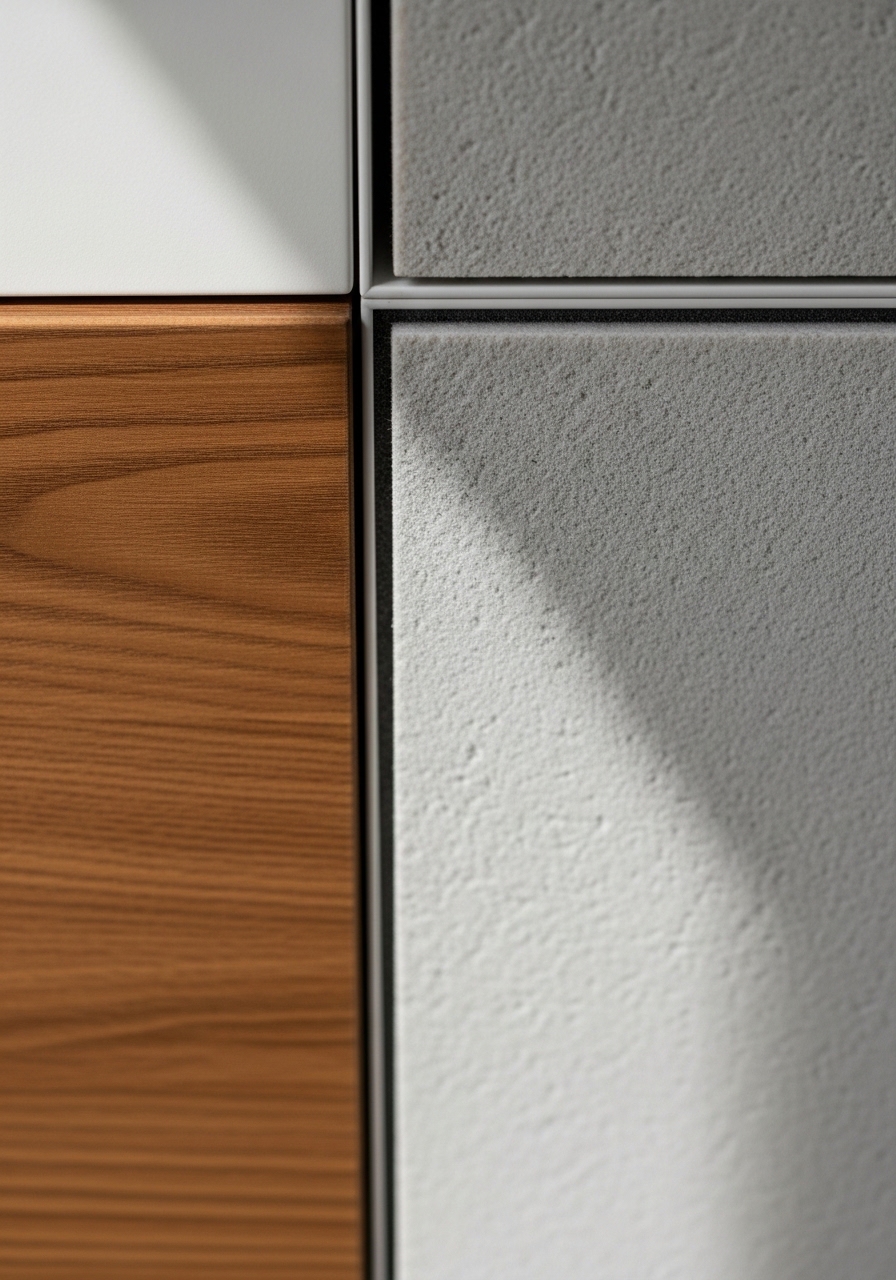
I add one oak tray over the island. Beige acoustics in corners absorb echo. Paint the rest eggshell neutral.
Textures warm the white. It feels intentional, not blank. People forget sound—soft panels quiet clatters without visual weight.
Don't mix too many. One wood, one soft—that's enough. Wipe dust weekly.
Ceiling settles in. Kitchen flows complete.
Balancing Ceiling with Modular Cabinets
Cabinets set the tone. I match ceiling drops to their heights. White panels echo light cabinets. Wood accents tie to lower pulls.
It creates unity. No floating top.
- Keep cove glow same temp as cabinet LEDs.
- Avoid glossy paints—matte bonds layers.
- Test balance: step back 10 feet.
Rooms feel taller this way.
Handling Odd Kitchen Shapes
L-shaped modules? I curve cove lines gently. No hard breaks.
Awkward corners get acoustic panels. They soften visually too.
- Follow the longest wall first.
- Skip symmetry in bends.
- Dim lights to even angles.
Balance comes from flow, not perfection.
Lighting Layers for Day and Night
Daylight bounces off matte panels. Night, cove leads, spots support.
I layer three levels: ambient, task, accent.
- Cove at 3000K warm.
- Spots brighter, adjustable.
- No direct downlights—harsh.
Kitchen shifts natural with time.
Final Thoughts
Try one layer first. Map your lines, add cove. See how it breathes.
You've got this. Small changes settle big.
My kitchen ceiling isn't perfect. But it fits us now. Yours will too.